Showing posts with label Catalonia. Show all posts

Friday, 30 November 2012

Grillou crosses the Pyrenees (3)

While we were over on the other side of the Pyrenees we met a few people like us, who've upped sticks from their own country and settled somewhere new. There's often a kind of bond amongst such 'strangers' that has nothing to do with country of origin and everything to do with the shared experience of culture change. I'm always open to opportunities for such random conversations, which often take place on café terraces or in restaurants and are invariably fascinating.

But what comes up in these meetings, time and time again, is that there's one factor that seems to be number one in determining whether the move works out or not, and that's language - as in being able to speak it. Those who can't (and I include in that a French couple that we met over lunch in L'Ametlla de Mar) seem to feel like permanent holiday makers; those who can describe their adopted country as 'home'.

Although my French and Latin background means that I can understand a good deal of written Spanish and Catalan, my spoken command massacre of both doesn't bear description; it barely goes beyond being able to pass the time of day, book a hotel room or order lunch. Unfortunately it seems that my accent when I do manage to get out a few words must be reasonable, because invariably the other person comes back with a torrent of stuff at a million kilometres an hour that just goes right over my head; fortunately however it seems that my accent suggests me to be French and not English. I say fortunately for two reasons: firstly it's much more likely that the other person can cobble together a few words of French than English, and secondly because it's no secret that French visitors and holidaymakers are rather more respected than English ones.

And I have to tell you that I hated having a language barrier. Not just because of the shame I felt when I couldn't understand what people said to me, but also because there were so many things I wanted to ask different people at different times, like the incredibly helpful and knowledgeable woman who showed us round the Civil War Museum in Corbera d'Ebre. So it's decided: this year's Solstice resolution is going to be Getting To Grips With Spanish, at long last. But I'm left, once again, with the question of how people manage to live in a country without having at least a reasonable command of its language.

Tuesday, 27 November 2012

Grillou crosses the Pyrenees (2)

Catalonia has always made the most of the resources offered by the sea. The Mediterranean has given to the Catalans a great variety of marine species, up to 120. The most popular fish are small hake, sardines, John Dory or tuna. Nearly everything is used: heads and skeletons, small and ugly rock fish, crustaceans, ‘not very noble’ molluscs and urchin’s gonads. It can be said that the Catalans are one of the most ichthyophagous peoples in the world.
So says the portal site of the Generalitat de Catalunya, at least. I'm afraid I can't (knowingly) report back to you on the taste of urchin's gonads, but we did eat a lot of fish and seafood, and one of our most memorable afternoons was spent at the llotja - fish auction - in Sant Carles de Rapita. For no really apparent reason this little seaside town had a huge appeal for us - it's not the most obviously picturesque of the fishing villages we spent time at (that distinction goes to L'Ametlla de Mar), but it's one of those places that just seems to feel right.

It's one of the most important fishing ports in Catalonia, and we went for two reasons: to eat a fishy lunch (it's known for its seafood restaurants), and then to watch the landing and auctioning of the day's catch in late afternoon.

This is one of the very smallest boats we saw - most are huge


My flabber was well and truly glasted by the sheer number of boats and the amount of fish being landed - some 30 tonnes a day, apparently, on 5 days a week, except for May and June, when the fish get a respite. It's mostly sold by auction, though many buyers cluster round the boats as they come in; we were told that a lot of the fish goes to Madrid. 

Fish being unloaded from one of the boats


The auction itself is an amazing affair. It's hyper-modern, with all the bidding done electronically; buyers have a hand held gizmo, and as each tray of fish moves through the hall, they bid as the price goes down by pressing the right button. It's a Dutch auction - all about holding one's nerve!

The fish is loaded onto conveyor belts which take it through the hall


It's a bit like a theatre, and visitors are welcome to observe from the gallery at the top. So we did, spending a long time watching this fascinating process, learning the Catalan names for all sorts of fish and trying to work out how it all functioned. Each tray is photographed as it moves through the line; the details of the contents are flashed up on the screen in red letters and then the bidding starts. It's all over in seconds, then the next tray moves forward and so it continues.

The fish 'theatre' at Sant Carles de Rapita


It's easy when you're faced with the sheer volume of all this to start getting het up about overfishing, but the truth is that the vast majority of the catch does indeed seem to be 'small and ugly' fish and 'not very noble' molluscs, all apparently equally prized for the plate here; I certainly had one memorable fish soup which was more than half composed of odd looking things in shells, not one of which I recognised! It's probably the fish equivalent of nose to tail eating - gill to fin eating, would that be?


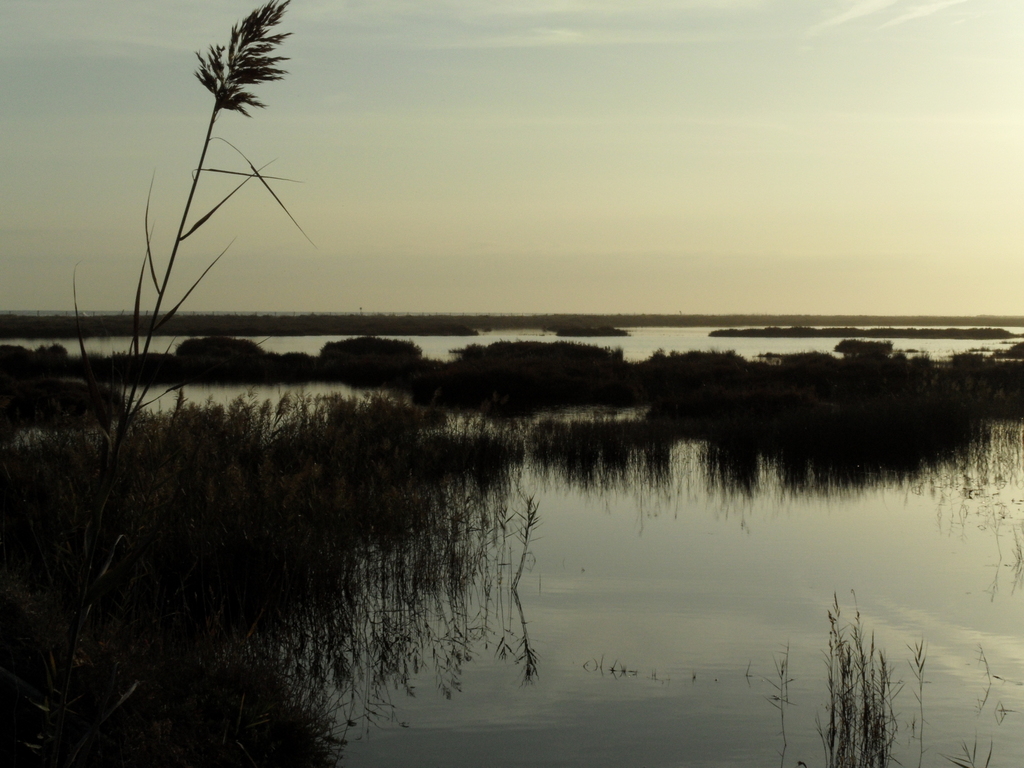
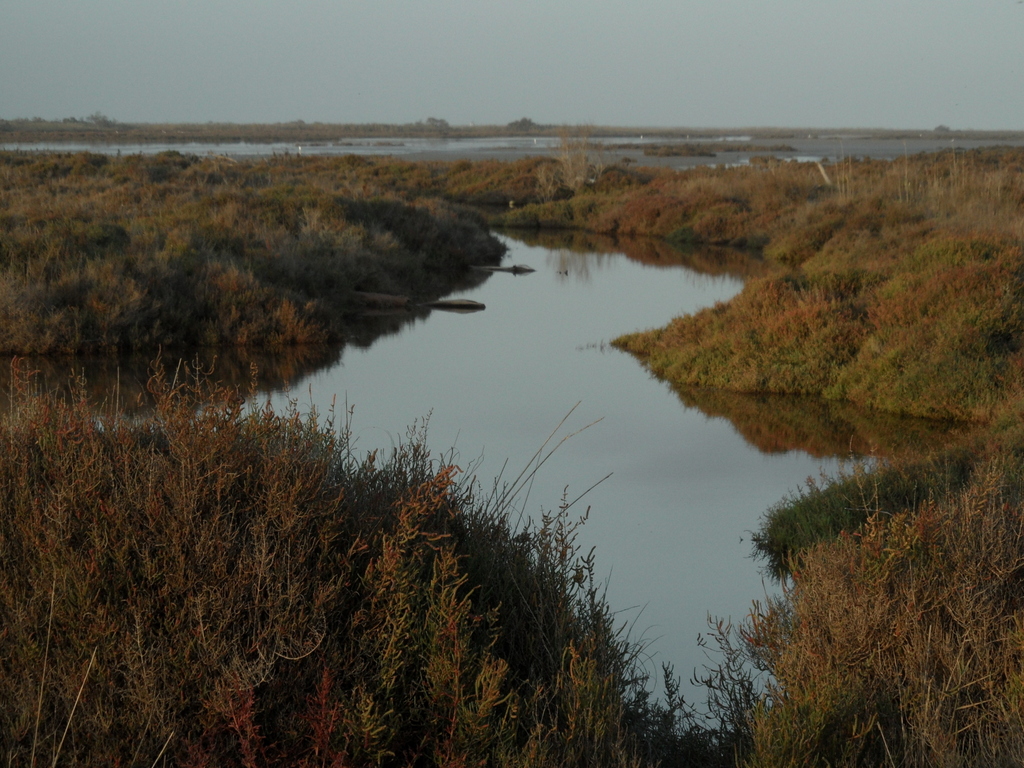
A sunset or three ...

The sunsets over the Ebro Delta were amazing, and it was always worth braving the mosquitoes to see them:






Monday, 26 November 2012

Grillou crosses the Pyrenees (1)

There's not much - almost nothing, in fact - that I miss from north Norfolk, but apart from the wonderful hot and buttery toasted teacakes at The Owl in Holt (sigh), I do miss the birds and the big skies of the marshes. Grillou is brilliant for birds - we have to keep remembering, for example, not to take for granted the fact that we have red and black kites flying over the garden pretty much every day - but there's something about wetland birds that reaches the twitcher in me that other birds just can't reach.

And so it was that I unanimously decided that we'd spend our holidays this year near the Ebro Delta in Catalonia, one of southern Europe's great wetlands (of course the fact that we'd be within spitting distance from the Priorat wine area may just have swayed the choice a little ...!). We're still getting used to the fact that we can be in Spain in less than an hour and a half, just about twice the time it used to take us to drive to our nearest town of Norwich; at the beginning of November we set off on a leisurely five hour drive through the dramatic scenery of the southern Pyrenean foothills, down onto the Lleida plain, up again into the craggy olive-growing mountains of southern Catalonia and then down to the banks of the Ebro, where we'd rented an apartment for a couple of weeks.


We didn't get teacakes, but we did get big skies and birds, including thousands of flamingoes (now you don't find those in Norfolk :) ) as well as some species that were new to us, like the red crested pochard and black-necked grebe. We also got great walking, clementines straight off the tree, wonderful wines, fabulous scenery, amazing sunsets, and some - um - fairly crappy weather ( if we'd stayed at home we'd have had nigh on wall-to-wall sunshine and 20+ degrees; although we had some good days it was relatively chilly and on occasion positively torrential). It's a great region that combines within a relatively small area three of my favourite things: birds, mountains (albeit little ones) and sea. Oh, and wine :), though I may have mentioned that already. So here and in the next post or three I'll share some photos and a taste of a part of Europe very different from our lovely Ariège.


A misty dawn over the Ebro

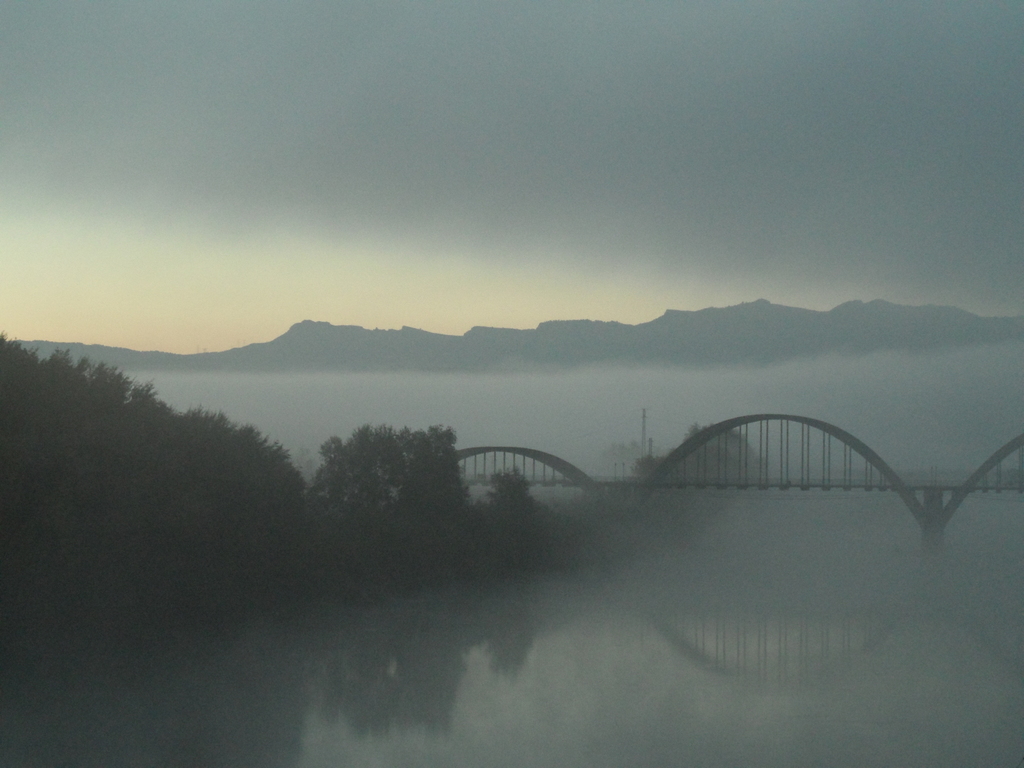
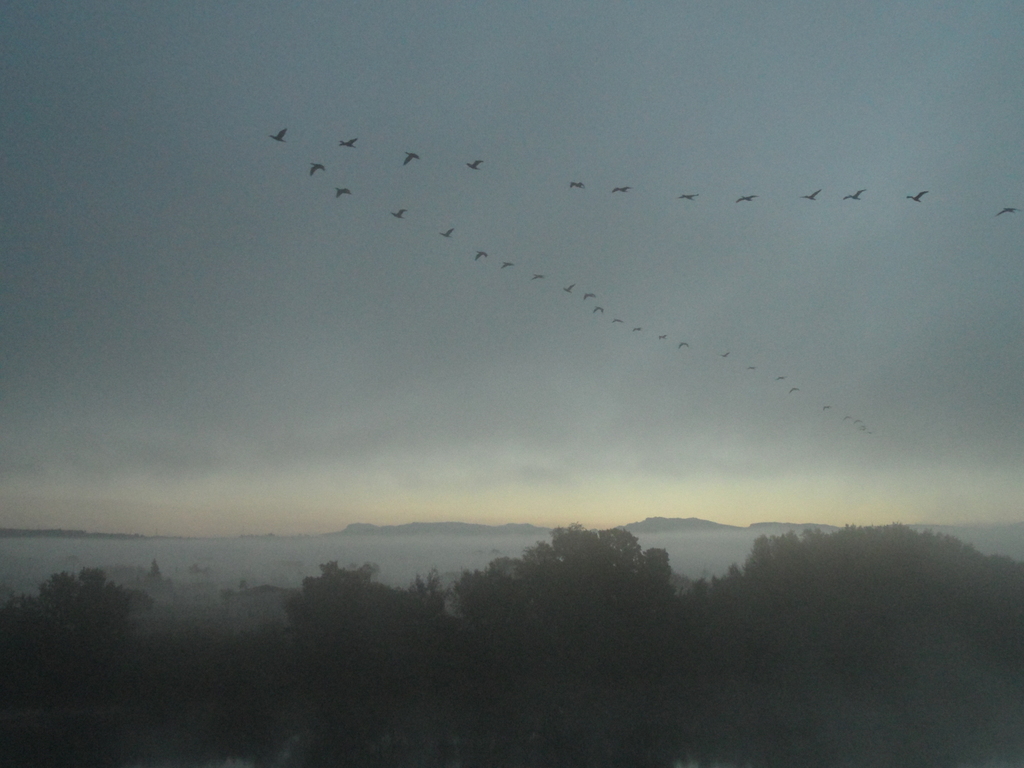
Our apartment was in the town of Mora d'Ebre, in the historic part which runs right along and behind the river. To be honest, the town itself isn't much to write home about, but it's well placed for exploring, the river banks are lovely, and this was the view we woke up to each day: 

From the balcony of our apartment
Bridge over the Ebro in the mist


Cormorants on their way up river

Looking up river

First hint of sunrise

Risen!