So, last Friday we decided to head east, over to the other side of Ariège - almost into Aude, in fact. We wanted to test out one of our new potential Slow Roads to see how it felt to actually follow and hence whether it would make it into the Slow Road collection. What's a Slow Road? Well, it's a term we've coined (along with Snail Trails for our walking paths) to describe some of the itineraries we're putting together here at Grillou for our future guests. A Slow Road will always be scenically beautiful (not difficult here), unhurried, quiet, a bit off the beaten track and sometimes slightly quirky; it will always offer interesting stops, a Slow Walk or two, at least one place to sit and just be, and somewhere interesting to eat and/or drink: in other words it will encompass all the different bits and pieces of the Slow philosophy.
We set off via Foix on the road to Lavalanet, but instead of continuing on the 'fast' road we turned off at Celles (don't be fooled by the grimy bit on the main road; behind that is a surprisingly pretty village with a lovely arcade of plane trees), from where a single track road starts to climb up towards the Col de la Lauze. Well before the Col, though, our attention was taken by a sign towards a chapel on the left: Notre Dame de Celles, site of an apparition. Never ones to turn down the prospect of a miracle, we followed it, up a steep road where there's a little parking area and an even steeper, stony pedestrian path through the trees. To be honest, the chapel is nothing much to write home about, unless you're a fan of Catholic neo Gothic, though the situation is beautiful. But I do like the story, although I had to dig it out when I got home as there's no mention of it on site when the chapel's closed: in 1686 (note that date well - nearly two centuries before the apparitions at Lourdes) a young paysan was coming back from the fields when a dove led him to a spring where it promptly turned into a young girl and told him not to be afraid because she was the Blessed Virgin (stop sniggering at the back, you heathens - I said 'the', not 'a' ...).
The people of Celles, she told him, needed to repent and it was his job to ensure that they did. Some time later, post-repentance, she appeared to him again and told him that the spring would be 'good'. After that dozens of people reported miraculous healings there; the place became a place of pilgrimage, and a chapel was built. However, the complex historical circumstances that prevailed at that point in time meant that the results of a religious enquiry that confirmed the miracles remained locked in a treasure chest in Pamiers; as a result the Vatican never got to 'pronounce' on the apparitions (if it had, Celles could have been Lourdes ... merde alors) and few people have ever heard of the place, although there is an annual pilgrimage and the chapel has very recently been restored.
Here's the chapel ...
in a lovely verdant setting
and the spring ...
Looks like the BV left her shampoo bottle behind ....
Showing posts with label history. Show all posts
Tuesday, 7 September 2010
Sunday, 14 December 2008
So who said Brussels is boring?
We've just spent a few days in Brussels. Don't ask me why; I really haven't a clue what possessed us to go there other than a travel deal so good that even the scary state of our sterling income couldn't entice me to turn it down and the fact that, bizarrely, I've never been there. The day before we set off, I was mournfully scanning the weather forecast for central Belgium and seriously contemplating doing a no-show (although ironically, it was in the event scarcely colder than the Arctic conditions that we're currently experiencing here ...).
Brussels doesn't come with an especially good press, having several times been voted 'the most boring city in Europe', and being popularly regarded as the grey haunt of grey Eurocrats. "You're going where???" shrieked friends, regarding me with that pitious expression reserved for those on the edge of a minor breakdown. But do you know what? Brussels is neither grey, nor boring, and we loved it. Here's why:
It's one of the most multi-cultural, and multi-lingual, cities I've ever been to; you can walk down the street and be surrounded by every European (and a good few non-European) language you can think of. For a language-holic like me that makes it hugely exciting. We had a memorable dinner one night at a south Italian trattoria where I could practise my appalling Italian as that was the lingua franca, and where for a good while we were the only non-Italians in the place; the next night we decamped to the Turkish area near the botanical gardens to eat pide and kefta every bit as good as I've eaten in Mugla.
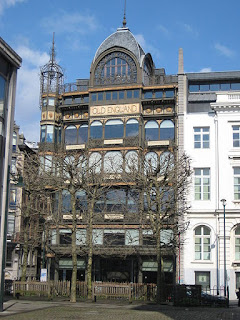
It has some fabulous Art Nouveau architecture, like the Musée des Instruments de Musique:
not to mention some superb galleries, like the Musée des Beaux Arts, where we ogled at Brueghel, puzzled at Magritte and discovered that Rubens didn't just paint buxom nudes.
It's great for street wandering, with lots of different quarters with distinctive looks and personalities, and it's small enough to explore on foot. The Sunday morning market by the Gare du Midi must be one of the biggest I've ever seen: part eye-popping vegetable market, part souk, we haggled for spices and ate Moroccan pancakes. And later that day, at the flea market at Place du Jeu de Balle, I found things I've been looking for for centuries, but had to leave them behind because they wouldn't fit in my rucksack ...

It's real. A bit gritty round the edges; a mish mash of old, new, beautiful, ordinary and (occasionally) jaw-droppingly ugly. Which means you have to work a bit harder, perhaps, than you do in Paris, or Rome. Which makes it all the more interesting.
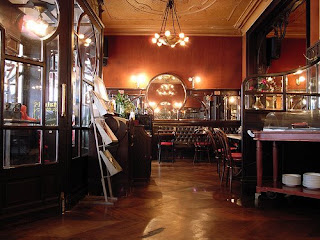
It has very decent bars and cafés. Cool ones, right-on environment friendly ones, trendy ones, traditional ones, brown ones ... two of our favourites were Au Vieux Bon Temps, which feels as though it hasn't changed since the forties (and probably nor has its clientele ...), and this one, Le Cirio, a bit more well known but with this gorgeous interior:
And (of course) it has beer. Nine hundred different ones, apparently, from over 200 breweries. And no, we didn't try them all, although we made a more than valiant attempt. I'm not usually an out-and-out beer lover, but these are different: more like tasting wine. A couple of 9% Trappist beers before dinner is enough to make you very happy indeed.
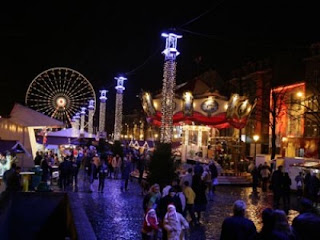
And it does a mean Christmas market. I'm not a Christmas person, at all - in fact I'm a bit of a bah humbug type - but I'm a sucker for pretty lights, ice rinks, mulled wine and all the trimmings, so long as it's not twee, which this wasn't. The sound and light show at the Grand Place was startling; the view from the top of the Big Wheel over the ice rink and market was straight out of Brueghel. On Sunday afternoon it felt as though the whole of Belgium was there, and we played sardines.
I'm glad we went when we did because it's not beyond the realms of possibility that Belgium as we know it may not survive indefinitely. Tensions between the Flemish and Walloon (French speaking) regions run high with Flemish politicians still looking for independence, and if the results of a poll of French speakers published in Le Point last week are to be believed, a majority of Walloons now wanting to join France. It's a fascinating but complicated story of the relationship between language and culture, which traces its roots back to the 1830s when the Netherlands ruled; the Walloons took to the streets in their own version of revolution, following which a kingdom was set up with French as its official language. It was only in the 1960s, when the heavy industries that had given Wallonia its financial power were in decline but French was still the predominant language of the bourgeoisie, that the country was officially divided into discrete language areas (still current) and Flanders was given more say in the country's politics. Brussels is an aberration: the only officially bi-lingual area in the country, it sits in Dutch speaking Flanders, though it's much more French than Dutch.
From what I can gather from Belgian commentators and blogs, much of the resentment between the two communities is based on stereotyping. The Flemish are frightened of the alleged Walloon contempt for the Dutch; they also fear that their growing prosperity will be dragged down by the poorer economic performance - and the perceived laziness - of the Walloons. "We have had enough of paying for people who are just sucking at the welfare tit. The Flemish have a work ethic, too many Walloons just expect a free ride," was a recent, and sadly typical, comment by a Flemish woman. It feels a bit as if the tension between the two communities is the tension between the Anglo Saxon way and the French way: do you live to work (Anglo Saxon), or do you work to live (French)? Big generalisations, yes. But that's how it is. There are endless stories of an every day language apartheid: a school in Flanders that won't take pupils if they speak French at home; a tennis club that turns away anyone heard to be speaking French. There are no Belgium-wide political parties: only Flemish, French and German (because there's a little known German-speaking community too) ones. A French gite owner once told me, from experience, that the biggest mistake I could make if I got an enquiry from a Flemish guest would be to speak to them in French rather than English - which would almost certainly lose the booking.
I suspect there won't be a happy ending to this one, any more than there is to most relationship breakdowns. Acrimonious divorce looks a bit more likely than mediation.
Brussels doesn't come with an especially good press, having several times been voted 'the most boring city in Europe', and being popularly regarded as the grey haunt of grey Eurocrats. "You're going where???" shrieked friends, regarding me with that pitious expression reserved for those on the edge of a minor breakdown. But do you know what? Brussels is neither grey, nor boring, and we loved it. Here's why:
It's one of the most multi-cultural, and multi-lingual, cities I've ever been to; you can walk down the street and be surrounded by every European (and a good few non-European) language you can think of. For a language-holic like me that makes it hugely exciting. We had a memorable dinner one night at a south Italian trattoria where I could practise my appalling Italian as that was the lingua franca, and where for a good while we were the only non-Italians in the place; the next night we decamped to the Turkish area near the botanical gardens to eat pide and kefta every bit as good as I've eaten in Mugla.
It has some fabulous Art Nouveau architecture, like the Musée des Instruments de Musique:

not to mention some superb galleries, like the Musée des Beaux Arts, where we ogled at Brueghel, puzzled at Magritte and discovered that Rubens didn't just paint buxom nudes.
It's great for street wandering, with lots of different quarters with distinctive looks and personalities, and it's small enough to explore on foot. The Sunday morning market by the Gare du Midi must be one of the biggest I've ever seen: part eye-popping vegetable market, part souk, we haggled for spices and ate Moroccan pancakes. And later that day, at the flea market at Place du Jeu de Balle, I found things I've been looking for for centuries, but had to leave them behind because they wouldn't fit in my rucksack ...

It's real. A bit gritty round the edges; a mish mash of old, new, beautiful, ordinary and (occasionally) jaw-droppingly ugly. Which means you have to work a bit harder, perhaps, than you do in Paris, or Rome. Which makes it all the more interesting.
It has very decent bars and cafés. Cool ones, right-on environment friendly ones, trendy ones, traditional ones, brown ones ... two of our favourites were Au Vieux Bon Temps, which feels as though it hasn't changed since the forties (and probably nor has its clientele ...), and this one, Le Cirio, a bit more well known but with this gorgeous interior:

And (of course) it has beer. Nine hundred different ones, apparently, from over 200 breweries. And no, we didn't try them all, although we made a more than valiant attempt. I'm not usually an out-and-out beer lover, but these are different: more like tasting wine. A couple of 9% Trappist beers before dinner is enough to make you very happy indeed.
And it does a mean Christmas market. I'm not a Christmas person, at all - in fact I'm a bit of a bah humbug type - but I'm a sucker for pretty lights, ice rinks, mulled wine and all the trimmings, so long as it's not twee, which this wasn't. The sound and light show at the Grand Place was startling; the view from the top of the Big Wheel over the ice rink and market was straight out of Brueghel. On Sunday afternoon it felt as though the whole of Belgium was there, and we played sardines.

I'm glad we went when we did because it's not beyond the realms of possibility that Belgium as we know it may not survive indefinitely. Tensions between the Flemish and Walloon (French speaking) regions run high with Flemish politicians still looking for independence, and if the results of a poll of French speakers published in Le Point last week are to be believed, a majority of Walloons now wanting to join France. It's a fascinating but complicated story of the relationship between language and culture, which traces its roots back to the 1830s when the Netherlands ruled; the Walloons took to the streets in their own version of revolution, following which a kingdom was set up with French as its official language. It was only in the 1960s, when the heavy industries that had given Wallonia its financial power were in decline but French was still the predominant language of the bourgeoisie, that the country was officially divided into discrete language areas (still current) and Flanders was given more say in the country's politics. Brussels is an aberration: the only officially bi-lingual area in the country, it sits in Dutch speaking Flanders, though it's much more French than Dutch.
From what I can gather from Belgian commentators and blogs, much of the resentment between the two communities is based on stereotyping. The Flemish are frightened of the alleged Walloon contempt for the Dutch; they also fear that their growing prosperity will be dragged down by the poorer economic performance - and the perceived laziness - of the Walloons. "We have had enough of paying for people who are just sucking at the welfare tit. The Flemish have a work ethic, too many Walloons just expect a free ride," was a recent, and sadly typical, comment by a Flemish woman. It feels a bit as if the tension between the two communities is the tension between the Anglo Saxon way and the French way: do you live to work (Anglo Saxon), or do you work to live (French)? Big generalisations, yes. But that's how it is. There are endless stories of an every day language apartheid: a school in Flanders that won't take pupils if they speak French at home; a tennis club that turns away anyone heard to be speaking French. There are no Belgium-wide political parties: only Flemish, French and German (because there's a little known German-speaking community too) ones. A French gite owner once told me, from experience, that the biggest mistake I could make if I got an enquiry from a Flemish guest would be to speak to them in French rather than English - which would almost certainly lose the booking.
I suspect there won't be a happy ending to this one, any more than there is to most relationship breakdowns. Acrimonious divorce looks a bit more likely than mediation.
Thursday, 21 August 2008
Once upon a time ...
I want to tell you a story, about our village, Rimont. Are you sitting comfortably? I hope so, because you might not be afterwards.

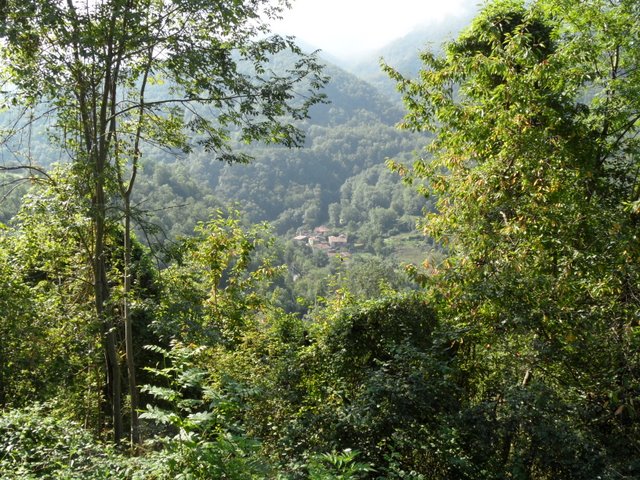
The picture above is of Rimont, taken last year. An attractive and peaceful bastide village built on a mound (le mont riant: laughing hill) in the foothills of the Pyrénées, surrounded by hills and farms. The village dates back to the thirteenth century. So, a mystery. Why do so few medieval houses remain? Here is its story.
Early in 1943, the Vichy government instituted a work scheme. Those born between 1920 and 1922 would henceforth be required to go and work in Germany to replace Germans who’d been drafted into the Wehrmacht. Unsurprisingly, many young people refused; instead they left home and hid deep in the country, in particular in the forests. Ariège (which by this time was, like the rest of the south of France, occupied by the Nazis) became a magnet for these early refugees because of its sheer wildness and isolation. Together with others - political activists, trade unionists, those who’d escaped from internment camps and Jews - they formed the first organised resisters - the maquis.

Over the next year, the three maquis groups in and around Rimont became increasingly active and organised various guerrilla actions: sabotaging factories, ambushing railways and Nazi troops as they moved through the department. Travelling the main road between Foix and St Girons became more and more hazardous for the occupiers. Things really began to hot up after the Normandy landings in June 1944; guerrilla actions were now happening every few days, and in turn both the Germans and the local French milice cracked down even harder: repression and reprisal became the official orders of the day. In Saint Girons, for example, an industrialist and prominent member of the fascist Parti Populaire Français created his own commando group, which according to one source “sows terror, tortures, plunders, burns, assassinates with impunity and often exceeds the Gestapo itself in effectiveness”.
At the little Chateau de Vignasse in the centre of Rimont lived Paul Laffont, a politician and one of Ariège’s great and good: member of parliament, senator, Secretary of State for Post, Telegraph and Telephone, President of the Conseil General (county council) … Like most radical-socialists of his day, Paul Laffont originally gave 100% support to Marshal Pétain and the Vichy government. And like most radical-socialists of his day, he remained pétainist for only a few months: unhappy at the racist and increasingly brutal collaborationist regime of the Vichy government, he decided to withdraw from political life. Refusing all the posts offered to him by Vichy, he was then ‘relieved’ of his position as president of the Conseil General. Many of his friends, such as the mayor of Rimont, suffered the same fate. Gradually, he attempted to engage in the Resistance movement – not entirely successfully as the majority of resisters found it hard to forgive his original support of collaboration. He did, however, succeed in giving a large sum of money to the local maquis. All the while, Laffont was under observation by both the German police and the French milice, some of whom apparently believed that he could be the chief instigator of the resistance that they feared yet knew little about. Early in the morning of the 13 July 1944, a Franco-German commando arrived at Laffont’s home in Rimont, seized him, took him away in a van to an unknown destination, then ransacked and vandalised his house. His close friend, Doctor Charles Labro, heard the commotion and ran towards the chateau; he too was brutally seized and taken away. Their bodies were found, separately, several days later, that of Doctor Labro very close to Grillou (now marked by a memorial). Both men had been tortured before being killed.
Two days later, the local maquis made a list of suspected collaborators, arrested some twenty people then summarily tried and executed 11 of them at nearby col de la Crouzette. It was found afterwards that some of these were malicious denunciations and that some of those executed weren't collaborators at all - a story repeated around France.

The price of liberation for Rimont was a high one: the village plus several farms and hamlets were burned almost in totality. 236 buildings were destroyed, including 152 houses, the schools, the Mairie, and all the village archives with it. 231 Rimontais were made homeless. Grillou survived, untouched.
As you enter the village today, you’ll see a chilling epitaph: ‘Rimont, village martyr’. The village was rebuilt afer the war, as closely as possible in style and construction to the original, and the 'village ressuscité' was inaugurated by the Minister for Reconstruction in 1950. As you walk the streets of Rimont, Saint Girons and the other local towns and villages, you’ll come time and time again across streets named after the men in these, and other, stories. The battle of Rimont may not have made the heroic war films of my childhood, but it lives on, here.

The picture above is of Rimont, taken last year. An attractive and peaceful bastide village built on a mound (le mont riant: laughing hill) in the foothills of the Pyrénées, surrounded by hills and farms. The village dates back to the thirteenth century. So, a mystery. Why do so few medieval houses remain? Here is its story.
Early in 1943, the Vichy government instituted a work scheme. Those born between 1920 and 1922 would henceforth be required to go and work in Germany to replace Germans who’d been drafted into the Wehrmacht. Unsurprisingly, many young people refused; instead they left home and hid deep in the country, in particular in the forests. Ariège (which by this time was, like the rest of the south of France, occupied by the Nazis) became a magnet for these early refugees because of its sheer wildness and isolation. Together with others - political activists, trade unionists, those who’d escaped from internment camps and Jews - they formed the first organised resisters - the maquis.

Over the next year, the three maquis groups in and around Rimont became increasingly active and organised various guerrilla actions: sabotaging factories, ambushing railways and Nazi troops as they moved through the department. Travelling the main road between Foix and St Girons became more and more hazardous for the occupiers. Things really began to hot up after the Normandy landings in June 1944; guerrilla actions were now happening every few days, and in turn both the Germans and the local French milice cracked down even harder: repression and reprisal became the official orders of the day. In Saint Girons, for example, an industrialist and prominent member of the fascist Parti Populaire Français created his own commando group, which according to one source “sows terror, tortures, plunders, burns, assassinates with impunity and often exceeds the Gestapo itself in effectiveness”.
At the little Chateau de Vignasse in the centre of Rimont lived Paul Laffont, a politician and one of Ariège’s great and good: member of parliament, senator, Secretary of State for Post, Telegraph and Telephone, President of the Conseil General (county council) … Like most radical-socialists of his day, Paul Laffont originally gave 100% support to Marshal Pétain and the Vichy government. And like most radical-socialists of his day, he remained pétainist for only a few months: unhappy at the racist and increasingly brutal collaborationist regime of the Vichy government, he decided to withdraw from political life. Refusing all the posts offered to him by Vichy, he was then ‘relieved’ of his position as president of the Conseil General. Many of his friends, such as the mayor of Rimont, suffered the same fate. Gradually, he attempted to engage in the Resistance movement – not entirely successfully as the majority of resisters found it hard to forgive his original support of collaboration. He did, however, succeed in giving a large sum of money to the local maquis. All the while, Laffont was under observation by both the German police and the French milice, some of whom apparently believed that he could be the chief instigator of the resistance that they feared yet knew little about. Early in the morning of the 13 July 1944, a Franco-German commando arrived at Laffont’s home in Rimont, seized him, took him away in a van to an unknown destination, then ransacked and vandalised his house. His close friend, Doctor Charles Labro, heard the commotion and ran towards the chateau; he too was brutally seized and taken away. Their bodies were found, separately, several days later, that of Doctor Labro very close to Grillou (now marked by a memorial). Both men had been tortured before being killed.
The battle of Rimont
Resistance was hotting up, and the Allied landings in Provence in August 1944 gave added impetus to the maquis of Ariège, which by now was playing a prominent part in the increasingly organised push towards liberation. On 20 August 1944, a long column of soldiers from the Legion of Turkestan, an adjunct to the German army made up of Central Asian prisoners from the Soviet war, was making its way from Saint Gaudens to Saint Girons; on arrival, there was fierce fighting in which the charismatic leader of one of Rimont’s maquis groups, Réné Plaisant, was killed; the maquis reluctantly decided to withdraw from the town to avoid carnage. That night was a rough one: hostages were taken, fires lit, shops and houses pillaged and women raped.
The next day, 21 August, the column set out towards Rimont – around 15 kilometres. Around 9am that morning, the local garage owner, who was on observation duty, saw it approaching. He counted 44 trucks without seeing the end of the column. Things were serious: there were at least 2000 men. The order to evacuate was given and many of Rimont’s inhabitants hid in the countryside. In the way of such things, however, the gendarmes – who were not on the best of terms with the résistants - had just received a message that a group of 15 Germans were approaching. The gendarmes went around all the houses asking those remaining not to leave but just to lock themselves in their houses. Many of the elderly preferred to sit it out at home, and complied. At the same time, the maquis managed to hold off the column until 11am, long enough for most of the population to flee, at which point they retreated, vastly outnumbered.
The German soldiers surrounded Rimont; the commander gave the order to burn the village to force a passage through it. Soon Rimont was engulfed by flames, the German and Turkestan soldiers screaming in a mad folie of rage, egged on by the French milice. The Rimontais could only flee to the surrounding hills, from where they watched helplessly as the medieval bastide village, along with everything they owned, went up in smoke. Those who lingered were attacked by German police dogs. Women were raped in their houses. All in all eleven Rimontais died in the combat, mainly elderly, one while he peeled potatoes outside his front door. Several groups of hostages were taken; the women were freed at midday, while one group of men were lined up along the wall of the local wine merchant. Realising that they were going to be shot, one of them, François Sentenac, made a break for it and escaped through the open hallway of the house behind him and through into the gardens beyond. The German soldiers gave chase, never returning. Other men were forced to lie face down in the middle of the battle until nightfall. This is how one of them described the experience:
“No idea what time it is. Not for a minute are we hungry or thirsty or cold. We feel nothing. And the battle rages around us while we serve as shields as the maquis kill opposite. And just over there, our village burns …”.
The column eventually moved through Rimont and on towards our neighbouring village of Castelnau Durban, which it occupied that night; the next day it continued its march but by that time large numbers of maquis fighters had arrived from Aude and Haute Garonne. Finally the Germans realised that they’d lost; they capitulated at Ségalas, defeated by 400 maquis.
Resistance was hotting up, and the Allied landings in Provence in August 1944 gave added impetus to the maquis of Ariège, which by now was playing a prominent part in the increasingly organised push towards liberation. On 20 August 1944, a long column of soldiers from the Legion of Turkestan, an adjunct to the German army made up of Central Asian prisoners from the Soviet war, was making its way from Saint Gaudens to Saint Girons; on arrival, there was fierce fighting in which the charismatic leader of one of Rimont’s maquis groups, Réné Plaisant, was killed; the maquis reluctantly decided to withdraw from the town to avoid carnage. That night was a rough one: hostages were taken, fires lit, shops and houses pillaged and women raped.
The next day, 21 August, the column set out towards Rimont – around 15 kilometres. Around 9am that morning, the local garage owner, who was on observation duty, saw it approaching. He counted 44 trucks without seeing the end of the column. Things were serious: there were at least 2000 men. The order to evacuate was given and many of Rimont’s inhabitants hid in the countryside. In the way of such things, however, the gendarmes – who were not on the best of terms with the résistants - had just received a message that a group of 15 Germans were approaching. The gendarmes went around all the houses asking those remaining not to leave but just to lock themselves in their houses. Many of the elderly preferred to sit it out at home, and complied. At the same time, the maquis managed to hold off the column until 11am, long enough for most of the population to flee, at which point they retreated, vastly outnumbered.
The German soldiers surrounded Rimont; the commander gave the order to burn the village to force a passage through it. Soon Rimont was engulfed by flames, the German and Turkestan soldiers screaming in a mad folie of rage, egged on by the French milice. The Rimontais could only flee to the surrounding hills, from where they watched helplessly as the medieval bastide village, along with everything they owned, went up in smoke. Those who lingered were attacked by German police dogs. Women were raped in their houses. All in all eleven Rimontais died in the combat, mainly elderly, one while he peeled potatoes outside his front door. Several groups of hostages were taken; the women were freed at midday, while one group of men were lined up along the wall of the local wine merchant. Realising that they were going to be shot, one of them, François Sentenac, made a break for it and escaped through the open hallway of the house behind him and through into the gardens beyond. The German soldiers gave chase, never returning. Other men were forced to lie face down in the middle of the battle until nightfall. This is how one of them described the experience:
“No idea what time it is. Not for a minute are we hungry or thirsty or cold. We feel nothing. And the battle rages around us while we serve as shields as the maquis kill opposite. And just over there, our village burns …”.
The column eventually moved through Rimont and on towards our neighbouring village of Castelnau Durban, which it occupied that night; the next day it continued its march but by that time large numbers of maquis fighters had arrived from Aude and Haute Garonne. Finally the Germans realised that they’d lost; they capitulated at Ségalas, defeated by 400 maquis.
The battle of Rimont, which took place exactly sixty-four years ago today, put an end to the Occupation in Ariège. Remarkably, the department was liberated entirely through civilian fighting – no regular armed forces were involved. But in France, the Second World War had become not just a fight against the Germans, but also one against the Vichy government. Those who had actively helped Vichy, whether by helping the Milice, denouncing the maquis or organising deportations, were arrested and tried: immediately following the liberation, France was swept by a wave of executions, public humiliations, assaults and detentions of suspected collaborators, known as the épuration sauvage (lit: wild purge); many dozens of people were shot in Ariège alone.

The price of liberation for Rimont was a high one: the village plus several farms and hamlets were burned almost in totality. 236 buildings were destroyed, including 152 houses, the schools, the Mairie, and all the village archives with it. 231 Rimontais were made homeless. Grillou survived, untouched.
As you enter the village today, you’ll see a chilling epitaph: ‘Rimont, village martyr’. The village was rebuilt afer the war, as closely as possible in style and construction to the original, and the 'village ressuscité' was inaugurated by the Minister for Reconstruction in 1950. As you walk the streets of Rimont, Saint Girons and the other local towns and villages, you’ll come time and time again across streets named after the men in these, and other, stories. The battle of Rimont may not have made the heroic war films of my childhood, but it lives on, here.
Note: my thanks to two French sites for the detail in this account: www.histariege.com, and this one. As far as I know, this is the first account in English of the battle of Rimont.
Friday, 9 May 2008
(Don't) mention the war?
Yesterday was yet another public holiday (May is a bumper month), this time commemorating the end of the Second World War in Europe in 1945.
One of the things that has really struck me over the last year is the way in which the legacy of the second world war years is still, in the twenty-first century, astonishingly present here. I would guess that we've watched on TV almost a dozen documentaries on the war years - not the gung-ho bang-bang things that I grew up with, but thoughtful, critical, investigative pieces that pull no punches and glorify nothing.
I grew up in England in the 1960s on a diet of war; my father spent the war in the RAF, my mother lived and worked in the East End of London and faced almost continuous fear in the form of daily bombings, along with the loss of many of her friends. She, and I think he as well, always looked secretly on those years as the 'happiest' in their lives; my mother was never more vibrant than when she was describing the moments when a V2 rocket engine had cut out and everybody held their collective breath, or the atmosphere in the communal shelters (sadly she spent much of her later life in depression, never able perhaps to recreate those same feelings of aliveness). My father told endless war stories and we watched black and white war films every Sunday afternoon. The war, in our house, was portrayed as something rather glorious.
The French legacy is different. Occupation, collaboration and the Vichy government, resistance and finally liberation have had a profound effect on France's national psyche which continues to this day. Much - the shadow of Pétainism, anti-Semitism and the horrors of collaboration, including the exportation and subsequent execution of some 76,000 French Jews - was simply too painful to talk about for decades; I studied French and French culture in the 1970s and it was barely addressed. Instead, France developed a powerful mythology of an occupied country typified almost entirely by resistance.
More recently, though, France has begun to come to terms with its wartime shadow-self and there has been a much more greater commitment to openness, with, for example, a new round of war trials in the 1990s, endless reflection on and debate about Mittérand's role in collaboration and Chirac's public apology in 1995 to the Jewish people for crimes committed by the Vichy régime. Collaboration is no longer swept under the carpet but acknowledged more freely, as in Sarkozy's speech at the official ceremony and wreath-laying yesterday - even if it is usually a bit well-of-course-we've-moved-on-from-that-and-I-don't-know-what-possessed-us. (Yes, that was the same Sarkozy who recently caused more than a bit of a stir with the suggestion - now dropped - that all French final year primary school children should be twinned with a Jewish child that had died in the Holocaust, and should learn 'their name and their existence' to keep their memory alive).
The role of the Résistance is still powerfully present in almost an every day fashion, especially here in Ariège which was one of the strongholds, with many Résistance groups involved in (amongst other things) leading people over the Pyrénées into Spain. Being an isolated farmhouse, it's very likely that Grillou played its part in the network; our village of Rimont has a particularly shocking tale to tell (too long to add here, but I'll post the story shortly) and many of the inhabitants come from Résistance families. Interestingly, Ariège attracts more than an average share of modern day resisters - the néo-rurales, as they (we) are called here: those who come to live a different life. Some are soixante-huitards (those involved in the social and political changes of 1968); others, like us, are downshifters; still others are young counter-cultural eco-warriors.
It's all a long way from The Dambusters.
One of the things that has really struck me over the last year is the way in which the legacy of the second world war years is still, in the twenty-first century, astonishingly present here. I would guess that we've watched on TV almost a dozen documentaries on the war years - not the gung-ho bang-bang things that I grew up with, but thoughtful, critical, investigative pieces that pull no punches and glorify nothing.
I grew up in England in the 1960s on a diet of war; my father spent the war in the RAF, my mother lived and worked in the East End of London and faced almost continuous fear in the form of daily bombings, along with the loss of many of her friends. She, and I think he as well, always looked secretly on those years as the 'happiest' in their lives; my mother was never more vibrant than when she was describing the moments when a V2 rocket engine had cut out and everybody held their collective breath, or the atmosphere in the communal shelters (sadly she spent much of her later life in depression, never able perhaps to recreate those same feelings of aliveness). My father told endless war stories and we watched black and white war films every Sunday afternoon. The war, in our house, was portrayed as something rather glorious.
The French legacy is different. Occupation, collaboration and the Vichy government, resistance and finally liberation have had a profound effect on France's national psyche which continues to this day. Much - the shadow of Pétainism, anti-Semitism and the horrors of collaboration, including the exportation and subsequent execution of some 76,000 French Jews - was simply too painful to talk about for decades; I studied French and French culture in the 1970s and it was barely addressed. Instead, France developed a powerful mythology of an occupied country typified almost entirely by resistance.
More recently, though, France has begun to come to terms with its wartime shadow-self and there has been a much more greater commitment to openness, with, for example, a new round of war trials in the 1990s, endless reflection on and debate about Mittérand's role in collaboration and Chirac's public apology in 1995 to the Jewish people for crimes committed by the Vichy régime. Collaboration is no longer swept under the carpet but acknowledged more freely, as in Sarkozy's speech at the official ceremony and wreath-laying yesterday - even if it is usually a bit well-of-course-we've-moved-on-from-that-and-I-don't-know-what-possessed-us. (Yes, that was the same Sarkozy who recently caused more than a bit of a stir with the suggestion - now dropped - that all French final year primary school children should be twinned with a Jewish child that had died in the Holocaust, and should learn 'their name and their existence' to keep their memory alive).
The role of the Résistance is still powerfully present in almost an every day fashion, especially here in Ariège which was one of the strongholds, with many Résistance groups involved in (amongst other things) leading people over the Pyrénées into Spain. Being an isolated farmhouse, it's very likely that Grillou played its part in the network; our village of Rimont has a particularly shocking tale to tell (too long to add here, but I'll post the story shortly) and many of the inhabitants come from Résistance families. Interestingly, Ariège attracts more than an average share of modern day resisters - the néo-rurales, as they (we) are called here: those who come to live a different life. Some are soixante-huitards (those involved in the social and political changes of 1968); others, like us, are downshifters; still others are young counter-cultural eco-warriors.
It's all a long way from The Dambusters.
Tuesday, 15 April 2008
How it all began ...
So there we were, halfway up a Pyrénée, stretched out in tee shirts enjoying the view, the midday sun and a rest for our Norfolk-flatland legs. It was January. I'm not sure which one of us started it (probably me; it usually is), but by the time we'd got back to our rented house that evening we'd decided to move to France.
Moving to France had been On The List for me for - oh, thirty odd years, ever since I was a student obsessed with the language and the country. Plans came and went; I got a proper job, the inevitable mortgage, all the usual baggage. I moved round the UK like a veritable nomad; dropped out, and back in, and then out again of a conventional(ish) lifestyle. Barely a year went by without a visit or three to France, but that's as far as it got. For John it was different: although he'd done his fair share of travelling, the USSR and the Eastern bloc (remember them?) had been more his style, and France was more than a bit of a mystery to him until we got together.
At the time of that winter trip, we'd been running terroir, our tiny restaurant with rooms in Cley next the Sea on the north Norfolk coast, for eight years. terroir happened, somehow; an antidote to our years of working in intensive/intense people-based professions with all the demoralising politicking that seems inexorably to go with work like that. It's a long story. For ten months a year, we cooked, hosted, washed up, grew vegetables, cultivated local suppliers, joined and promoted the Slow Food movement before anyone much had heard of it, and learned as we went along. We worked towards being carbon neutral, ran a carbon offset scheme along with Climate Care, and did our level (if largely unsuccessful) best to get other small businesses to adopt greener practices. Meanwhile North Norfolk became fashionable, every other house became a second home, and although we barely advertised, we became increasingly well known and often had silly waiting lists.
We had enormous fun, and met some really great (plus a few not-so-great) people. We learned that there's nothing quite like the buzz of a really convivial evening when something just clicks and a whole roomful of dinner guests feel it. We also worked 14 hour days, six days a week, answered the phone from 7 in the morning to after midnight, shared our home on a daily basis with 12 or 13 people, and almost never got to see the sea. That kind of life has a definite expiry date; when you sense it coming, you do one of two things. You carry on doing what you're doing, but you pull your self back from it, you disconnect ... or you move on. We moved on.
Moving to France had been On The List for me for - oh, thirty odd years, ever since I was a student obsessed with the language and the country. Plans came and went; I got a proper job, the inevitable mortgage, all the usual baggage. I moved round the UK like a veritable nomad; dropped out, and back in, and then out again of a conventional(ish) lifestyle. Barely a year went by without a visit or three to France, but that's as far as it got. For John it was different: although he'd done his fair share of travelling, the USSR and the Eastern bloc (remember them?) had been more his style, and France was more than a bit of a mystery to him until we got together.
At the time of that winter trip, we'd been running terroir, our tiny restaurant with rooms in Cley next the Sea on the north Norfolk coast, for eight years. terroir happened, somehow; an antidote to our years of working in intensive/intense people-based professions with all the demoralising politicking that seems inexorably to go with work like that. It's a long story. For ten months a year, we cooked, hosted, washed up, grew vegetables, cultivated local suppliers, joined and promoted the Slow Food movement before anyone much had heard of it, and learned as we went along. We worked towards being carbon neutral, ran a carbon offset scheme along with Climate Care, and did our level (if largely unsuccessful) best to get other small businesses to adopt greener practices. Meanwhile North Norfolk became fashionable, every other house became a second home, and although we barely advertised, we became increasingly well known and often had silly waiting lists.
We had enormous fun, and met some really great (plus a few not-so-great) people. We learned that there's nothing quite like the buzz of a really convivial evening when something just clicks and a whole roomful of dinner guests feel it. We also worked 14 hour days, six days a week, answered the phone from 7 in the morning to after midnight, shared our home on a daily basis with 12 or 13 people, and almost never got to see the sea. That kind of life has a definite expiry date; when you sense it coming, you do one of two things. You carry on doing what you're doing, but you pull your self back from it, you disconnect ... or you move on. We moved on.
Subscribe to:
Posts (Atom)
