Showing posts with label holidays. Show all posts

Tuesday, 27 November 2012

Grillou crosses the Pyrenees (2)

Catalonia has always made the most of the resources offered by the sea. The Mediterranean has given to the Catalans a great variety of marine species, up to 120. The most popular fish are small hake, sardines, John Dory or tuna. Nearly everything is used: heads and skeletons, small and ugly rock fish, crustaceans, ‘not very noble’ molluscs and urchin’s gonads. It can be said that the Catalans are one of the most ichthyophagous peoples in the world.
So says the portal site of the Generalitat de Catalunya, at least. I'm afraid I can't (knowingly) report back to you on the taste of urchin's gonads, but we did eat a lot of fish and seafood, and one of our most memorable afternoons was spent at the llotja - fish auction - in Sant Carles de Rapita. For no really apparent reason this little seaside town had a huge appeal for us - it's not the most obviously picturesque of the fishing villages we spent time at (that distinction goes to L'Ametlla de Mar), but it's one of those places that just seems to feel right.

It's one of the most important fishing ports in Catalonia, and we went for two reasons: to eat a fishy lunch (it's known for its seafood restaurants), and then to watch the landing and auctioning of the day's catch in late afternoon.

This is one of the very smallest boats we saw - most are huge


My flabber was well and truly glasted by the sheer number of boats and the amount of fish being landed - some 30 tonnes a day, apparently, on 5 days a week, except for May and June, when the fish get a respite. It's mostly sold by auction, though many buyers cluster round the boats as they come in; we were told that a lot of the fish goes to Madrid. 

Fish being unloaded from one of the boats


The auction itself is an amazing affair. It's hyper-modern, with all the bidding done electronically; buyers have a hand held gizmo, and as each tray of fish moves through the hall, they bid as the price goes down by pressing the right button. It's a Dutch auction - all about holding one's nerve!

The fish is loaded onto conveyor belts which take it through the hall


It's a bit like a theatre, and visitors are welcome to observe from the gallery at the top. So we did, spending a long time watching this fascinating process, learning the Catalan names for all sorts of fish and trying to work out how it all functioned. Each tray is photographed as it moves through the line; the details of the contents are flashed up on the screen in red letters and then the bidding starts. It's all over in seconds, then the next tray moves forward and so it continues.

The fish 'theatre' at Sant Carles de Rapita


It's easy when you're faced with the sheer volume of all this to start getting het up about overfishing, but the truth is that the vast majority of the catch does indeed seem to be 'small and ugly' fish and 'not very noble' molluscs, all apparently equally prized for the plate here; I certainly had one memorable fish soup which was more than half composed of odd looking things in shells, not one of which I recognised! It's probably the fish equivalent of nose to tail eating - gill to fin eating, would that be?


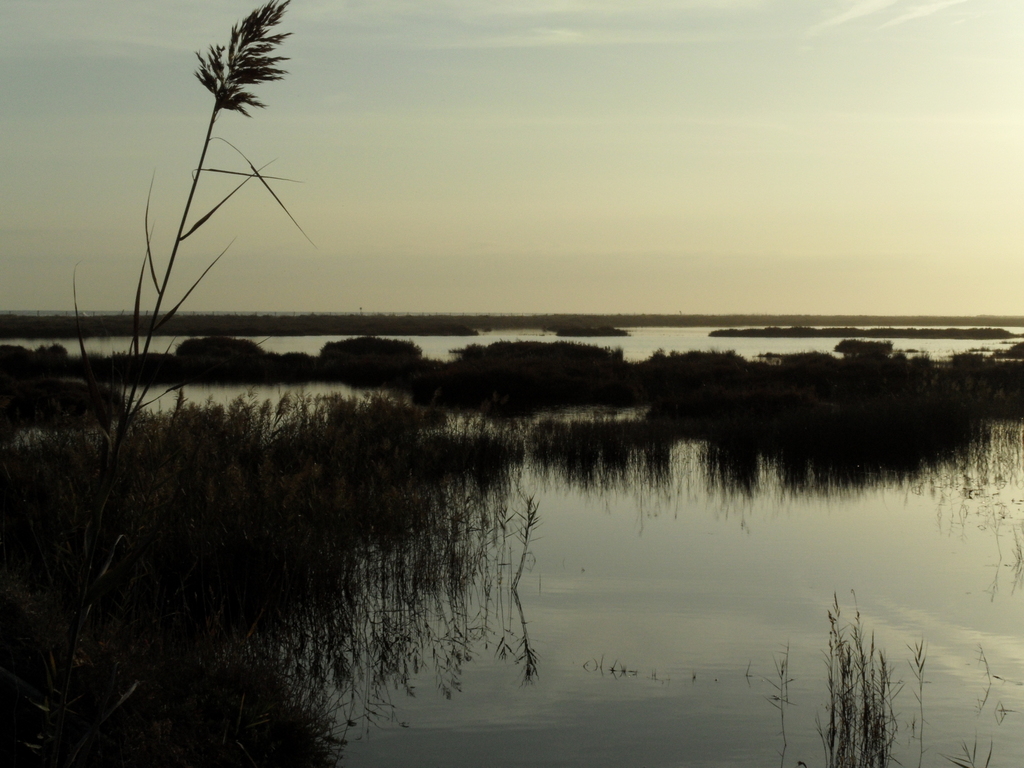
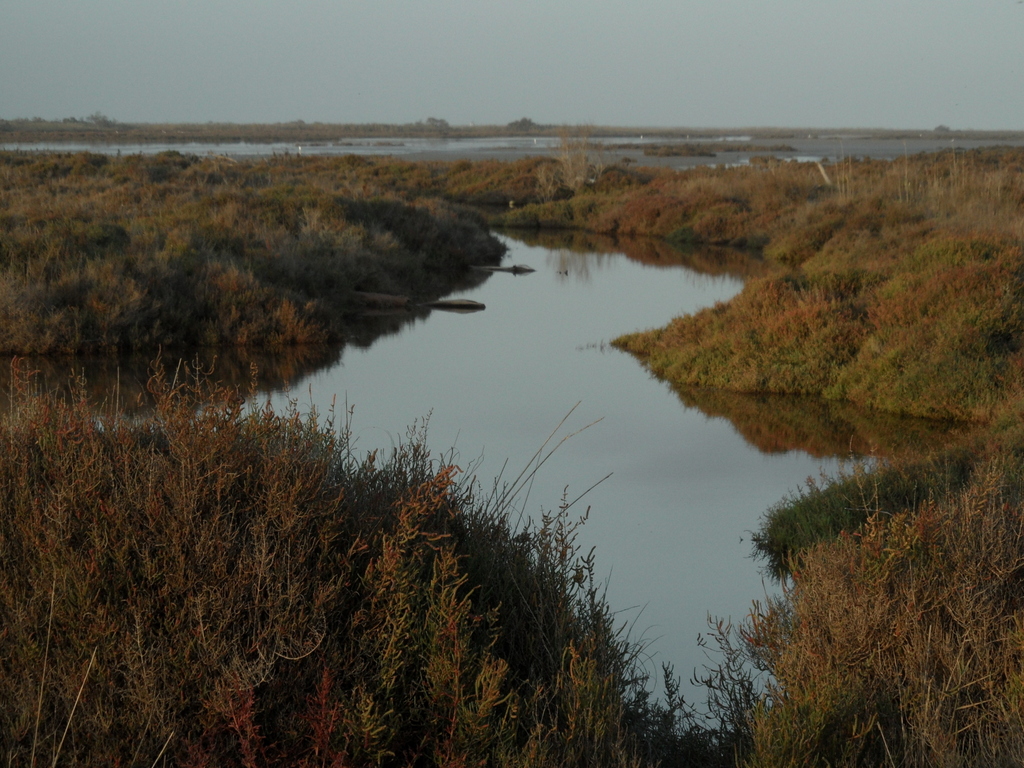
A sunset or three ...

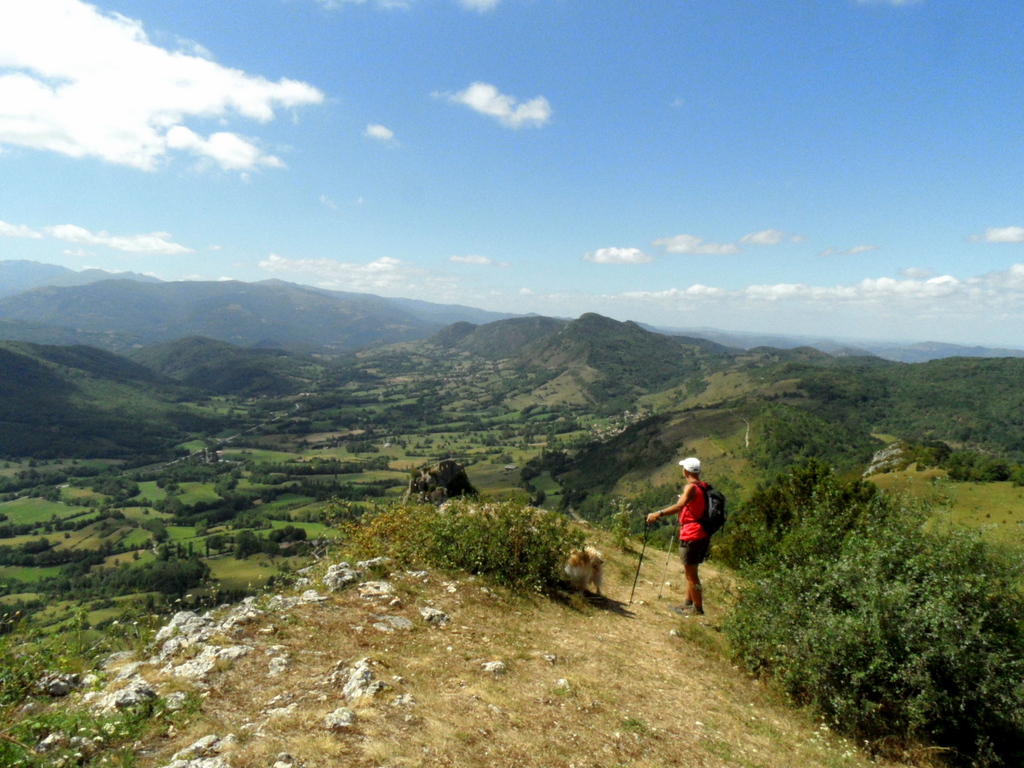
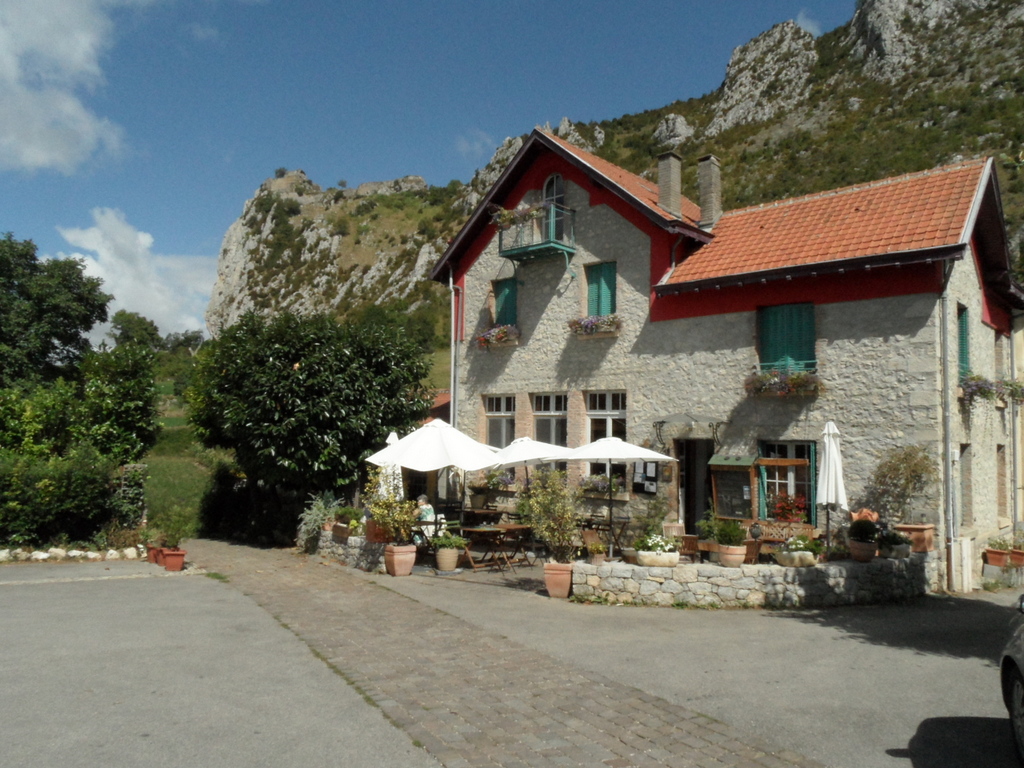
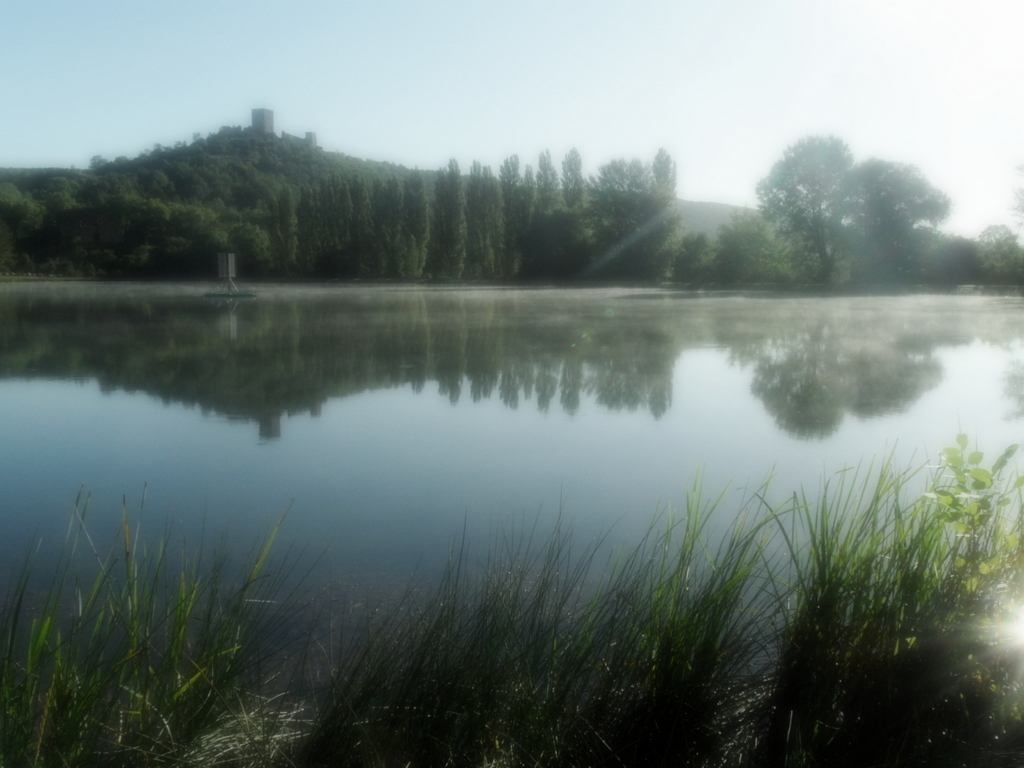
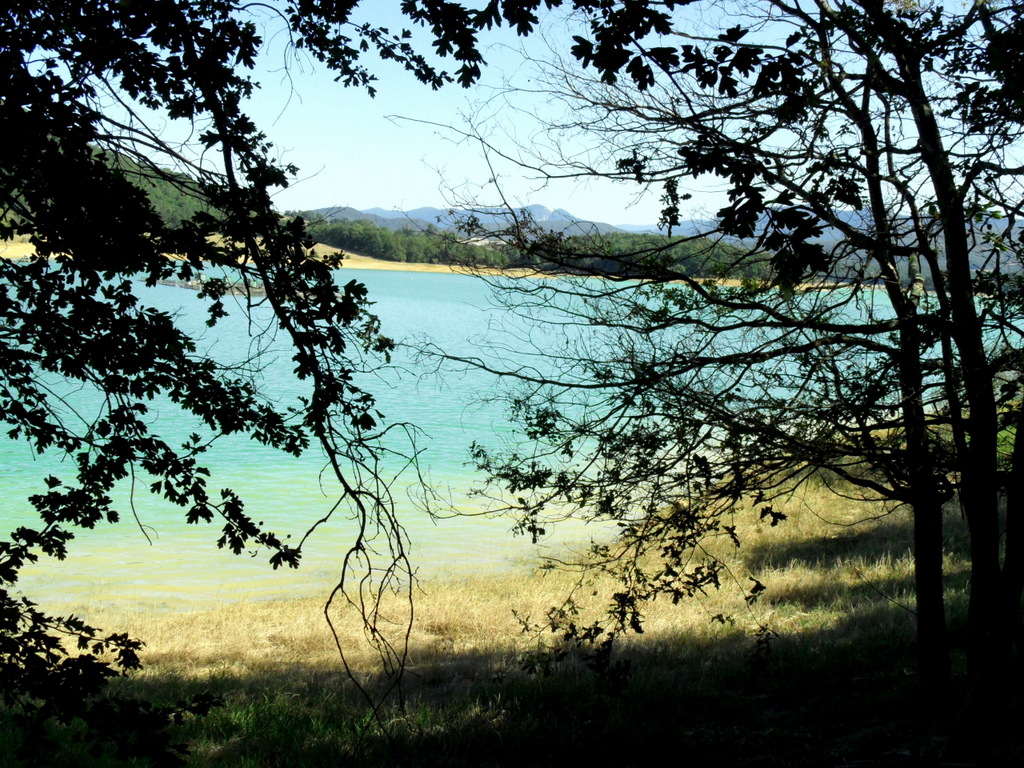
The sunsets over the Ebro Delta were amazing, and it was always worth braving the mosquitoes to see them:





















Monday, 26 November 2012

Grillou crosses the Pyrenees (1)

There's not much - almost nothing, in fact - that I miss from north Norfolk, but apart from the wonderful hot and buttery toasted teacakes at The Owl in Holt (sigh), I do miss the birds and the big skies of the marshes. Grillou is brilliant for birds - we have to keep remembering, for example, not to take for granted the fact that we have red and black kites flying over the garden pretty much every day - but there's something about wetland birds that reaches the twitcher in me that other birds just can't reach.

And so it was that I unanimously decided that we'd spend our holidays this year near the Ebro Delta in Catalonia, one of southern Europe's great wetlands (of course the fact that we'd be within spitting distance from the Priorat wine area may just have swayed the choice a little ...!). We're still getting used to the fact that we can be in Spain in less than an hour and a half, just about twice the time it used to take us to drive to our nearest town of Norwich; at the beginning of November we set off on a leisurely five hour drive through the dramatic scenery of the southern Pyrenean foothills, down onto the Lleida plain, up again into the craggy olive-growing mountains of southern Catalonia and then down to the banks of the Ebro, where we'd rented an apartment for a couple of weeks.


We didn't get teacakes, but we did get big skies and birds, including thousands of flamingoes (now you don't find those in Norfolk :) ) as well as some species that were new to us, like the red crested pochard and black-necked grebe. We also got great walking, clementines straight off the tree, wonderful wines, fabulous scenery, amazing sunsets, and some - um - fairly crappy weather ( if we'd stayed at home we'd have had nigh on wall-to-wall sunshine and 20+ degrees; although we had some good days it was relatively chilly and on occasion positively torrential). It's a great region that combines within a relatively small area three of my favourite things: birds, mountains (albeit little ones) and sea. Oh, and wine :), though I may have mentioned that already. So here and in the next post or three I'll share some photos and a taste of a part of Europe very different from our lovely Ariège.


A misty dawn over the Ebro

Our apartment was in the town of Mora d'Ebre, in the historic part which runs right along and behind the river. To be honest, the town itself isn't much to write home about, but it's well placed for exploring, the river banks are lovely, and this was the view we woke up to each day: 

From the balcony of our apartment
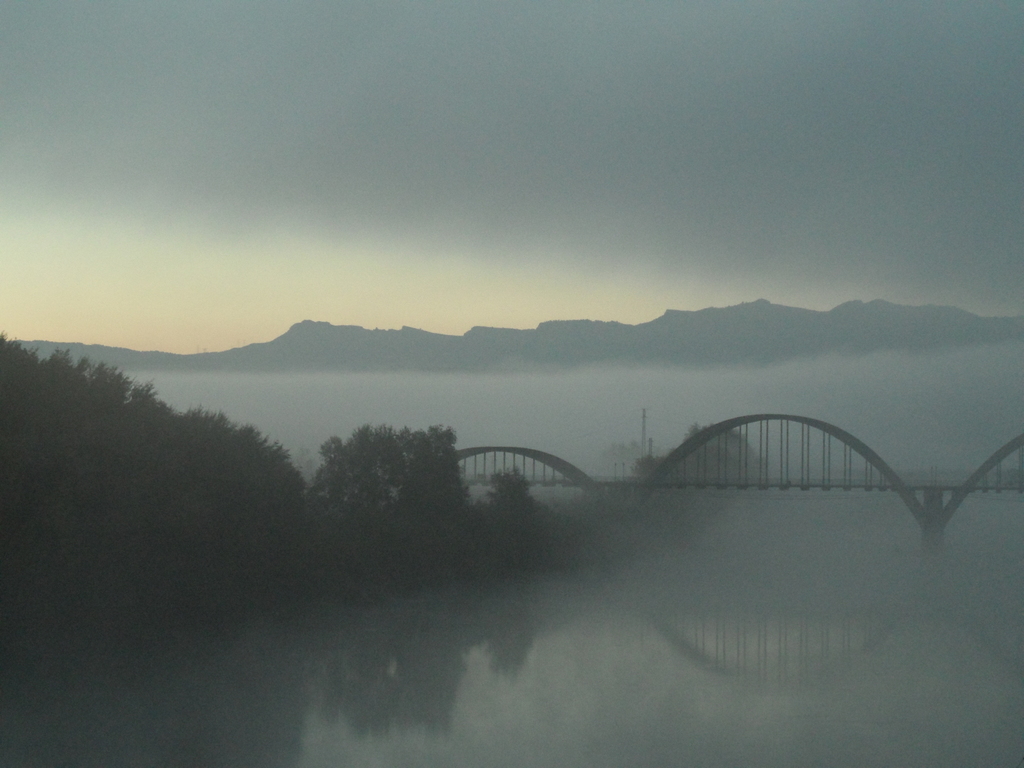
Bridge over the Ebro in the mist


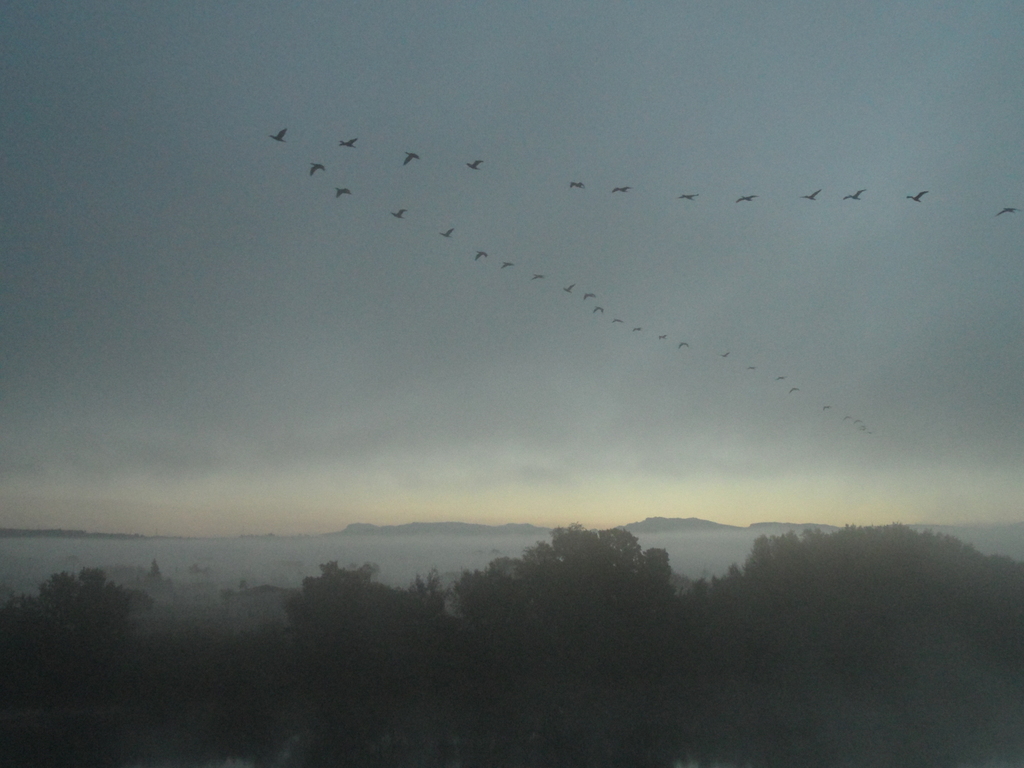
Cormorants on their way up river

Looking up river

First hint of sunrise

Risen!

Friday, 31 August 2012

Cathares and Canadairs

Since we've been here we've somehow stumbled into the habit of taking a few days out during the last week of August to explore and get to know our area better - we call it our Ariège holiday. And this year was no exception - we blocked it in the diary many months ago, and then when we found out that the village boulangerie was also taking its hols this week there was really no argument (unless you're one of the people who wanted to stay with us. Sorry).

Having spent a manic two days turning the last few hundred kilos of plums (okay, I exaggerate. But not by much) into ice cream, sorbet, sauce, compôte, jelly and sweet chilli jam, we decided to take Sunday gently, starting with a long slow breakfast reading the papers in Foix before setting off on our first walk, a circular walk around and above the ruined Cathare château of Roquefixade and the village of the same name. This is a great walk and one that many of our guests enjoy - short enough for an afternoon, easy enough for almost anybody yet hugely satisfying and with breathtaking views.

Looking down onto the medieval village


First glimpse of the view south

And it just gets better ...
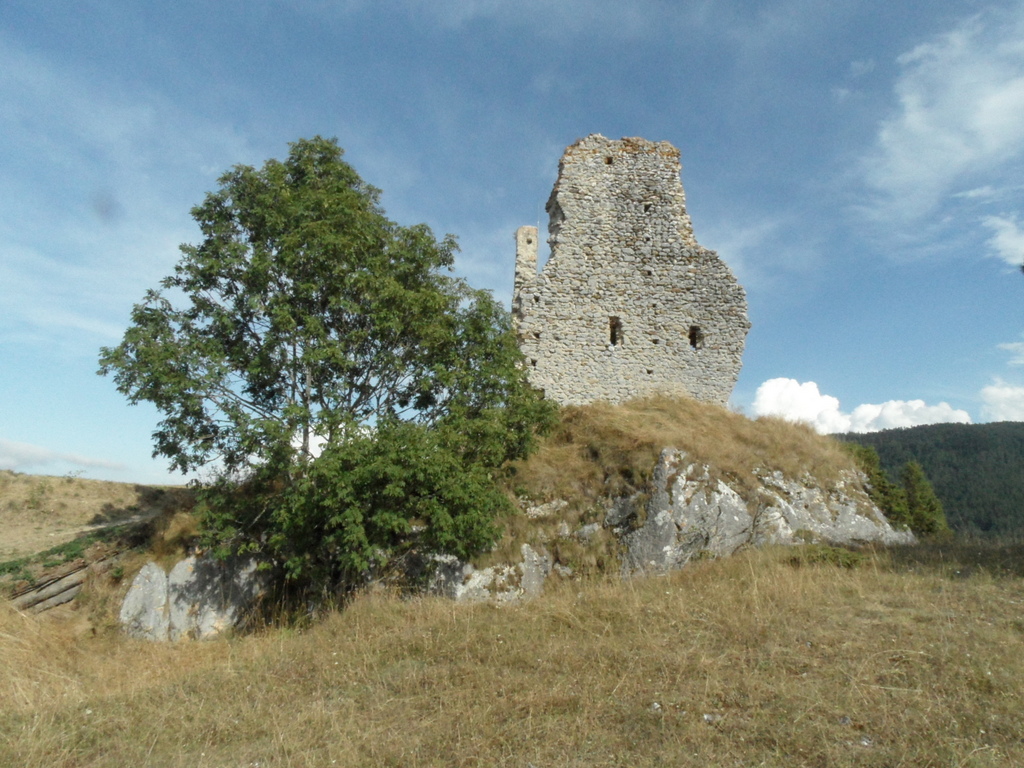
The château is quite literally 'fixed to the rock'

Back in the village, a lovely gîte d'étape for a beer afterwards

Then it was on to Puivert, just over the border into Aude, and one of our favourite campsites:

'Our' pitch looks right over the lake 
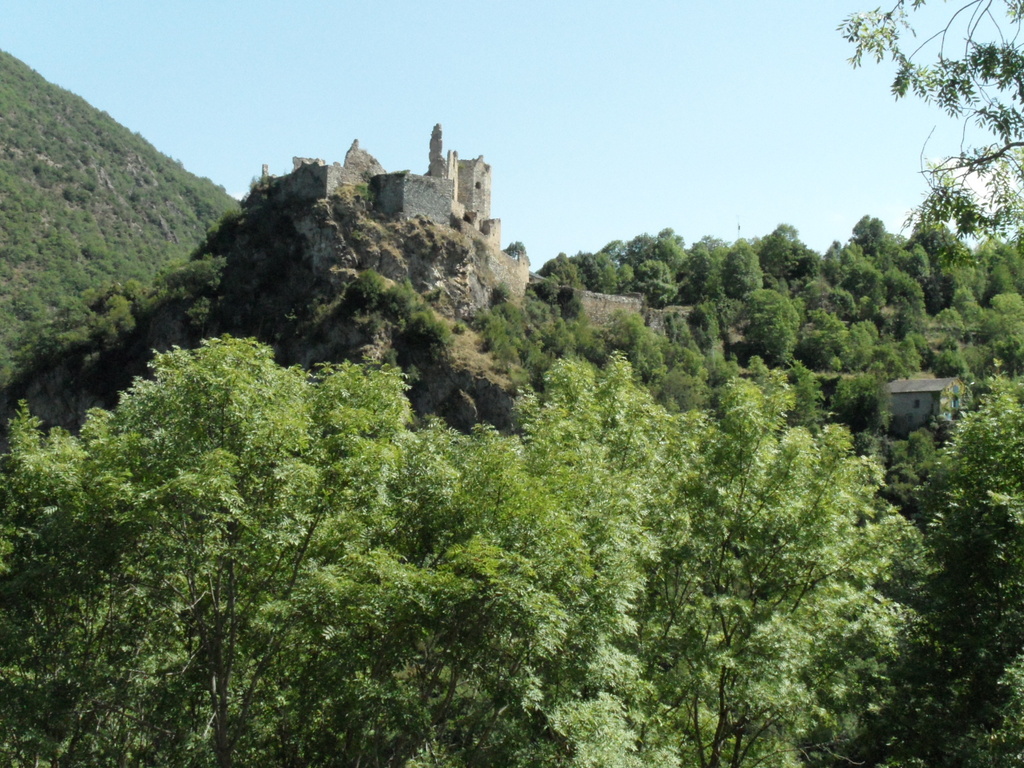
Here's the view - yes, another Cathare château
How do you tear yourself away from that? Well, you don't, really - you have a coffee and pain aux raisins, then a swim, then another coffee ... and then it's midday ... Eventually you decide to spend the afternoon walking the part of the path around Lac Montbel, a few kilometres away, that you haven't yet done.

You could think yourself on the Med ...
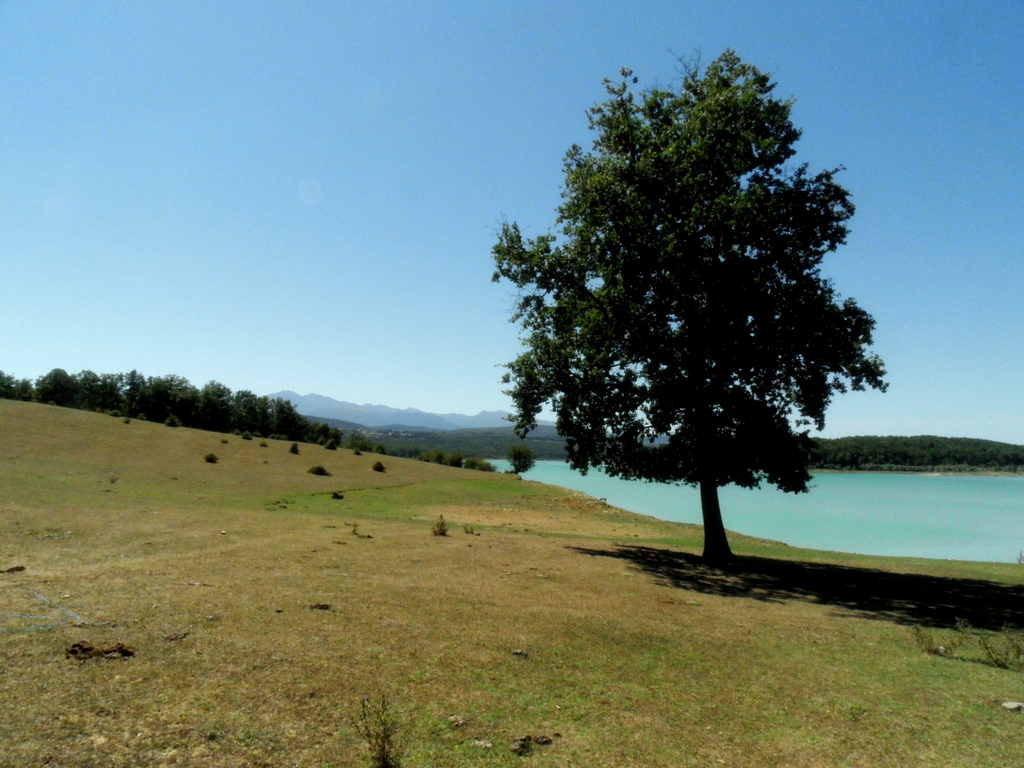
And yes, the water really is that colour ...
On our way round, I was struck by a very strange, small cloud in a dip over the mountains to the south - it seemed to be a very strange shape. I put it down to a local storm, hoped it wouldn't make its way north, and thought no more about it. After a very hot walk, with no sign of a break in the weather, we landed back at the wonderful guinguette L'Ecume des Jours (recommended, both for its genuine beach shack atmosphere and for its slightly alternative twice weekly concerts) for a beer, and we were just enjoying the bizarre sense of feeling as though we were on a Greek island when suddenly two big yellow planes flew right over us. "They're Canadairs!" I yelled, as I leapt up to see what was what. A Canadair is a water bomber, or fire fighting plane; they fight inaccessible forest fires by scooping up water from the sea or a lake, and dropping it over burning forest. I first encountered them many years ago in Corsica, and although I've watched them several times since both on the French coast and in Greece I've somehow never lost the thrill of seeing them in action. Half the customers of the guinguette followed me over to the beach to wait for them to come back; we weren't disappointed, and cameras clicked wildly, mine included:

So skillful, the way they scoop up the water
I could almost touch this one
Altogether the Canadairs came back 5 times. After the first time, the local pompiers arrived, blue lights flashing, with several landrovers and a boat, presumably in case someone was unfortunate enough to get in the way of the planes. A siren now announced the Canadairs' arrival and drew an increasing number of spectators from the villages around, and the whole place began to feel like a big party. And then suddenly, it struck me. The odd looking 'cloud' that I'd seen nearly 4 hours earlier had been smoke; great chimneys of it were now rising from the exact same spot.

Later, I discovered that the fire had been a reprise of an earlier fire at L'Hospitalet: the one that Margaret wrote about in her blog just a few days ago. Scarier than that, I learned that the new outbreak had been discovered at around 4pm. I'd seen the smoke - although I hadn't realised that was what it was - two hours before that. I shuddered.

I did a lot more than shudder the next day, though you'll have to wait until the next post to find out why. In the meantime, enjoy a couple more of the Cathare châteaux we took in on the trip:

This is Usson, in Donezan, one of my new favourite places
Montaillou, made famous by the author Le Roy Ladurie

Saturday, 5 May 2012

Ponting

It's best, I've learned in the five years we've been here, not to bank on getting too much done in May. And I'm not talking about the weather this time.


Actually, I'm not talking about yoga either ... :-)

May is the month of the ponts. Well, no, let's take a step back first: May is the month of the public holiday. Four of them, to be precise: the Fête du Travail (Labour Day), Victoire 1945 (Victory in Europe Day), Ascension and Lundi de Lundi de Pentecôte. Depending on the date of Easter it usually works out at about one a week. That's not half bad in itself.

But when a public holiday happens to fall on a Thursday or a Tuesday, the French like to faire le pont, or bridge the gap, by taking off Friday or Monday as well. In fact it's become so common to faire le pont that even if the holiday falls on a Wednesday people will be still ponting all over the place. Many small enterprises and commerces - and even schools and public services - shut down altogether on pont days so that you have to keep a weather (oops - sorry. I'm not really obsessed with the weather, honest) eye on the calendar if you've got Things To Do. I made the mistake of not doing that last Monday and found half the places I needed to go closed, and the other half teeming with ponting families determined to spend their buckshee day off in a queue ....

There is a kind of trade off though. When a public holiday falls on a Saturday or Sunday, so be it. There's no compensatory day as there is, for example, in the UK - so when last Christmas and New Year's Day both fell on Sunday, workers here got no time off at all. And let's face it, who wouldn't prefer time off in May to mid-winter?

Next Monday will be another pont, as will Friday of the following week. So that's three four day weekends, followed by the three day Pentecôte (Ascension) weekend at the end of the month. Now if we could only have some half decent weather ...........

Monday, 12 March 2012

Escape the Olympics in the French Pyrenees

This is one of those years when I'm very glad I don't live in the UK. First of all I'd have to put up with days of Jubilee hype and simpering sycophantic grovelling by the BBC's latest 'Royal correspondent' (shudder). And if as all that weren't enough, just a few weeks later there are the much-touted Olympics: more flag waving patriotic stuff .... and sport. Double shudder.

I know I'm being subtle here :-) but you may be picking up that I really can't be doing with all this nationalistic fervour. Maybe I have a gene missing but I just don't have any sort of patriotic sense of 'my country' or any of that stuff. It's bad enough having to carry a passport that makes me into a 'citizen of the United Kingdom' - why on earth (sic) can't I just be a citizen of the planet, full stop?

If you're as turned off by all this as I am, you might want to think about escaping for a few days. I can't do much about the Jubilee, I'm afraid - we've been full for that week within days of opening bookings and have been regularly turning people down since - but if you fancy escaping the Olympics in the French Pyrenees, we still have some space!

Here are just a few of the things you could be enjoying instead:

Poddling around on quiet roads.
Long peaceful walks in the mountains or foothills or valleys.
Picnics by cool streams up in the high summer pastures.
Some seriously good chamber music in a Romanesque cathedral at the St Lizier festival.
Swimming in the 28 degree water of the Lac de Mondély, then sipping a cold beer.
Watching marmots and chamois at Orlu.
Dancing with a partner who's wearing traditional costume and clogs at St Girons' huge folklore festival.
Eating a 'kebcam' under the stars, with jazz playing gently in the background, at Jean-Luc and José's duck buvette.
Dancing till the early hours to live African bands at Foix's 3 day African festival.
Watching vultures swoop over the crags while you eat lunch in the auberge overlooking the Etang d'Ayes.
Cooling off in some of the biggest prehistoric caves in Europe.
Spending a lazy afternoon in our garden listening to perfect, unbroken silence (home made cake or ice cream at tea time too!).
Chilling in the new spa at Ax les Thermes.
Enjoying a holistic massage or pulsing session in the garden at Maison Grillou, under the shade of one of our big trees.
Lying on a sun lounger at midnight with a glass of rosé, watching the Perseids meteor showers in Ariège's perfectly clear, dark, unpolluted skies.

We'd love to welcome others of like mind during the Olympic fortnight, so if you're tempted, go to Maison Grillou's Facebook page, 'like' it, book with us using the code you'll find there and we'll throw in a few extra treats for you when you arrive!

Saturday, 13 August 2011

Dilemmas

It's a tough time here in Ariège just now. Particularly for an indecisive Libran music lover like me.

Thursday: the first night of the new Ercé in Jazz festival, or Vivaldi meets Guinness meets Brazil with the violin group Cordzam in Salies du Salat?

Friday: Blues in Sem, the second night of Ercé in Jazz, or Lëk Sèn at the first night of Ingénieuse Afrique in Foix?

Saturday: Eastern European music from Zaman Zaman at the café culturel Le Souleilla in our neighbouring village, the third night of Ercé in Jazz, or two gigs (Ahmed Cissé and Les Choeurs de Brazza) at Ingénieuse Afrique?

Sunday: lots of folklore-y stuff in St Girons at Autrefois les Couserans, the son et lumière Le Secret des Cathares in Foix, or Harouna Dembele at Ingénieuse Afrique?

Monday: the night market at Castillon - always good fun - or a several-times-postponed trip to Toulouse to collect an oven?

Tuesday: the Choeur de Crimée performing Rachmaninov's Vespers and other goodies in the church at Le Mas d'Azil .... or an early night? Okay, I admit it; after five consecutive (very) late nights and many hours spent dancing, we chose the early night .... but the week went on, and we'll be catching up with the Choeur de Crimée next week at the Festival de Saint Lizier ......

There's always a big sense of build up in the fortnight approaching 15 August, which is a public holiday here (Assumption), and none the more so than in years like this when it falls on a Monday and thus creates a long holiday weekend. "France at a snail's pace!" cried our regional paper; according to one commentator it's the time when many holiday homes get opened up, and camping cars get dusted off, for the one and only occasion in the year. After Assumption thoughts, and holidaymakers, begin to turn homewards, the village fête reigns supreme, and the prospect of la rentrée begins to loom large. In a couple of weeks we'll have the roads to ourselves again.

One dilemma we don't have is whether to pass the next four nights with our fellow villagers under the plane trees at Rimont's annual fête locale. Why? Well, if you've ever heard any of the bands that trawl village fêtes here you don't need to ask. If you haven't, think Birdie Song meets 1980s French pop meets Songs From The Shows meets Jonny Hallyday take-offs, all played at ear shattering volume through appalling sound systems (from Grillou we can hear not only our own fête, but that of our two neighbouring villages, though thankfully not all at the same time). Maybe you just have to be there to appreciate it, but I think I'll just leave that one to the imagination ...

PS Monday's band is called Ad'vil, which also happens to be a brand of ibuprofen. I rest my case.

Tuesday, 2 November 2010

Culture shock 2

We're just back from a few days break away from Grillou, a kind of punctuation mark between the life we've led this summer and the one to come over the winter. Fitting, because it coincided with Samhain, traditionally a time for looking back, for letting go of the old to make way for the new. We went to Périgord Noir, between Bergerac and Sarlat, an area that neither of us had visited before. Beautiful though it is, after the first day we almost turned tail and came home.

On the agenda was a bit of exploring, and a lot of walking, and so we stayed in a small, and very pleasant, town between the valleys of the Dordogne and the Vezère rivers where we thought we'd get the best of both worlds. What I wasn't prepared for was the sheer heights to which tourism has been raised there. Now I'm not a good tourist at the best of times: I hate 'attractions' and guided tours and all the junk that comes along with them, and I hate being regimented; I'd much sooner stumble upon quirky, low-key places almost by accident than have everything presented to me on placards and in guide books. And I particularly hate being seen as exploitation fodder. So when, on the first day of our holiday, we thought we would briefly explore a couple of the well known villages on the Dordogne before setting out on a walk from the third, I neither expected nor appreciated having to stuff a parking meter with a rather large amount of change in order to park anywhere within four kilometres of - well, anywhere, really. Hectares of each village were given over to paying (yes, even between 12pm and 2pm, unheard of and truly shocking) parking, with all other land barred off; in spite it of being the Toussaint school holidays the car parks were mostly empty, meaning of course no trade for local businesses ... now how crazy is that as a policy ??? We did stop at one and had a desultory look around, but after half an hour of feeling as though we were in an over-restored and twee theme park we decided, simultaneously, to beat a hasty retreat.

The same evening we ate out in a simple restaurant in our local town known and recommended for its wood fired pizzas. We ordered a pichet of red wine. "You'd prefer a half bottle of this" said our host. Er, no, actually we wouldn't. He snorted, and asked us whether we'd like water. Of course we would. "Still or sparkling?" asked our host. No, just a carafe of tap water, I said. It's many years since I've been through this charade; in Ariège, as in most of southern France, water is brought to your table with a basket of bread almost as you sit down. He snorted again. We ordered pizzas. "Would you like a side order of chips?" asked our relentless host. (Chips?? With pizza???) By now we were feeling distinctly uncomfortable, as if as visitors to the area we were fair game to be milked for cash. Our host sulked off to the kitchen, returning a couple of minutes later to ask ... if we were Belgian.

For the rest of our stay we did our best to get more off the beaten track. The landscape is lovely - deep valleys, limestone cliffs and wooded hills - as is the vernacular architecture. But it's just all so ... nice. The verges look as though they've been clipped with nail scissors; nearly all the houses are immaculate; even the trees are neat. There are no soixante-huitards or 'eepees', not a dreadlock or a beur to be seen (and gens de voyage - travellers - are actually prohibited from stopping anywhere in the two valleys). The level of control - for residents as well as visitors - is awesome. After a few days I was longing to get back to the laid back, well worn, non money-grasping, somewhat anarchic, culturally mixed vibe of Ariège.

And so here we are, home. And at home.

Thursday, 9 September 2010

Taking the Slow Road to the Gorges de la Frau: Part Three

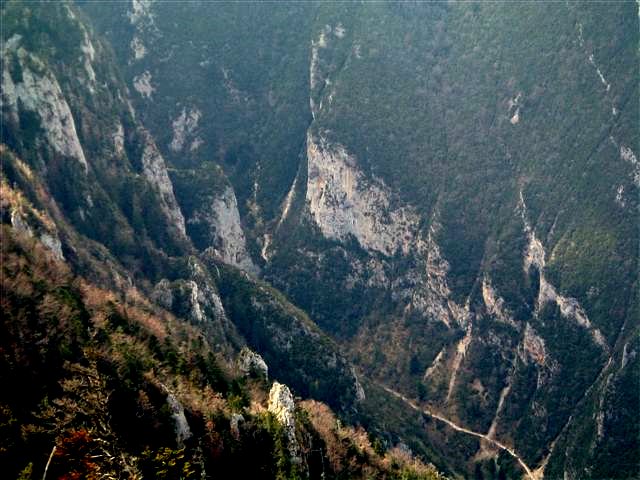
And in staying much longer than we intended, before we knew it it was too late to continue upwards to Le Pas d'Ours, where there is a superb viewpoint over the gorges we'd just walked up. But that's the nature of Slow Walking - the moment is always more important than any pre-fixed plan. Just for good measure, this is what we missed:


Thanks to Gunther at Le Silence du Midi for that photo. See that little snake-y thing down the bottom? That's the path. The very same path that took us almost as long to walk down as it did to walk up, given the way the stones on the steep bits had a distinct tendency to slide from underfoot and take you where you had no intention, or desire, to go. You have been warned ...

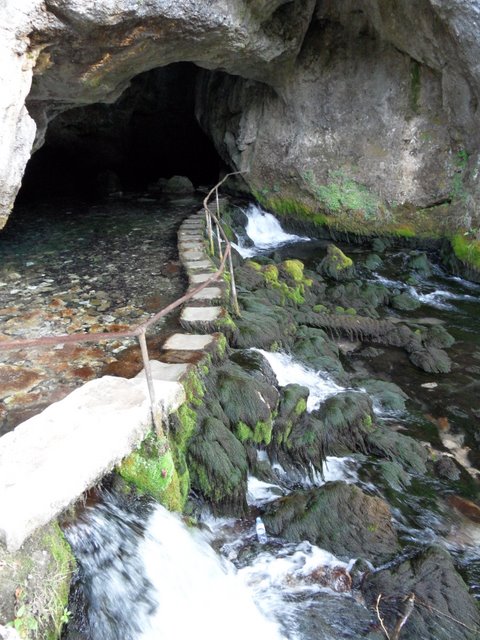
We wound our way back through Belesta to Foix, stopping at the Fontaine de Fontestorbes on the way. Now this is an odd thing. It's an 'intermittent spring', one of only a handful in the world. What that means is that in summer the water flow changes from almost nothing to a raging torrent, and back again, in a cycle that seems to vary between 32 and 70 minutes or so. When we arrived, there was a bit more than a trickle, but not much, and I was just about to follow the stepping stones into the cave when I thought I detected a slight increase in the flow levels.


Sure enough, we'd arrived just at the beginning of a cycle; within no more than 5 minutes the source was belting out water at a rate of knots and the stepping stones were part of a waterfall.


Although it sounds about as exciting as like watching paint dry, it's strangely compulsive viewing (okay, so maybe I have a high boredom threshold). I made a brief attempt to understand the physics behind it - there's an 'idiot's guide' on a panel - but I'm sorry to say that it completely passed me by ... unsurprisingly as my grasp of conventional physics never really got beyond the ball and ring experiment. There's a scarily comprehensive non-idiot's guide here, should you be so inclined. We and a couple of women stayed and watched the water for half an hour or so, filling our water bottles too (ice cold and delicious) until, would you believe, a pensioners' coach party arrived from Toulouse. It was time to go.

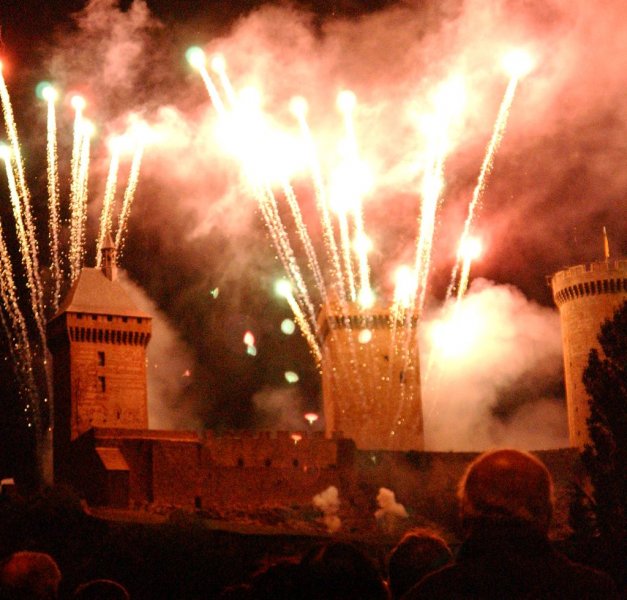
We finished the evening in Foix, where it was the first day of the fêtes locales. A huge funfair had taken over the town centre, and it felt as though the whole of Ariége had arrived to watch the firework display. At 10.30 sharp the streetlights went out, the dodgems drifted to a halt, and everybody gathered below the chateau to wait and watch and ooh and aah. It was magnificent.

Wednesday, 8 September 2010

Taking the Slow Road to the Gorges de la Frau: Part Two

From Notre Dame de Celles, the road snakes over some lovely, hidden countryside below Mont Fourcat (which I confess I'd never heard of), past remote and tiny hamlets - one of which in particular fascinated me as all four houses appear to have their doors opening onto a communal courtyard. The residents must obviously be a lot more tolerant than I am. After a while we hit the village of Montferrier - the main street of which is so narrow that we had to reverse no less than three times before we could pass - where I'm told there is a bar-restaurant, but as I've never managed to locate it, that may be an unfounded rumour (actually, I've never quite 'got' Montferrier - we once went to view a house there but rapidly made an excuse and left, though that of course could just be me ...). Never mind - the scenery is beautiful, and never less than when suddenly the Cathar castle of Montségur appeared before us.


Montségur is probably the most well known of all the Cathar sites and has developed something of a cult following in recent years. In a nutshell, it was the last major stronghold of the Cathars during the Crusades, when it was besieged by the royal troops of the Catholic church for some ten months. When the Cathars there finally surrendered, they were given the choice of renouncing their faith, or being burned. Over 200 of them refused to renounce and were burned in a field just below the castle. Impossible to think about that without a small shiver running up the spine ...


There are legends too: some say that it was the last known resting place of the Holy Grail. And as if all that weren't enough, it surely can't be a coincidence that the building is designed so that on the morning of the summer solstice the first rays of sunlight shine in through the windows on one side, through the keep, and out of the windows on the other side ... (In actual fact, the present chateau apparently post-dates that occupied by the Cathars, which was destroyed by the royal troops, but hey - when did any of us let facts get in the way of a good story?).

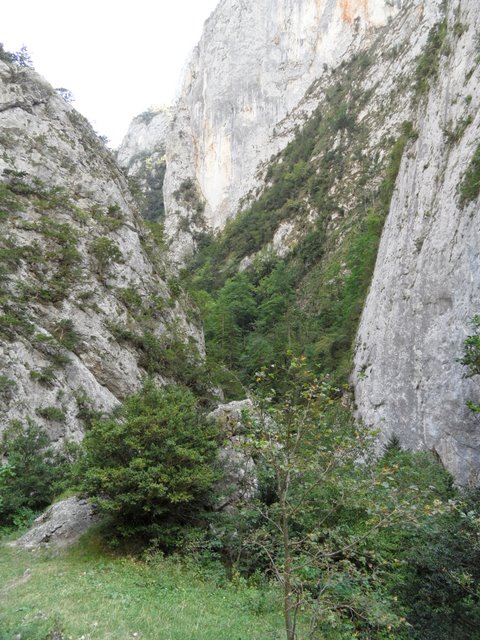
Not long after passing Montségur we reached the long drawn out and rather strange village of Fougax-et-Barrineuf. Passing swiftly on, in more ways than one, we took a small road leading to the Gorges de la Frau and drove to the point where the tarmac ran out - the start of our walk. No gentle warm up to this walk: straight away you're puffing up a steep gradient as the path - not much more than a loose pile of rocks at this point - climbs up between the rocks that tower some 400 metres above you to either side.


The gorges are part of a Réserve Biologique, designed to protect ancient forested areas that have somehow managed to remain un-messed-about-with by us humans, and to allow their biodiversity to evolve naturally and with minimal intervention. The gorges are undeniably spectacular, but sadly dry, and I found myself yearning for the sound of running (or even trickling) water.


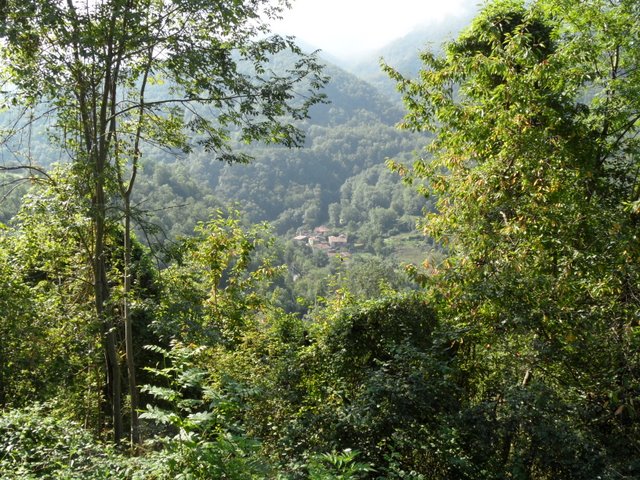
Some three kilometres later, we emerged from the sheerest part of the gorges into the department of Aude. The path turned into a woodland piste, which we followed for another three kilometres to the village of Comus on the edge of the Plateau de Sault ...


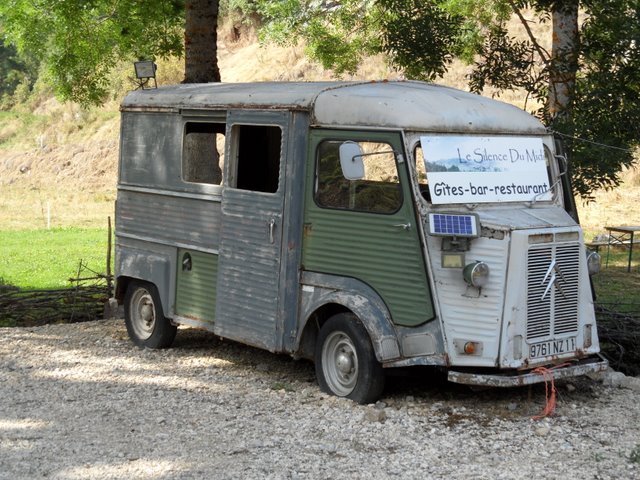
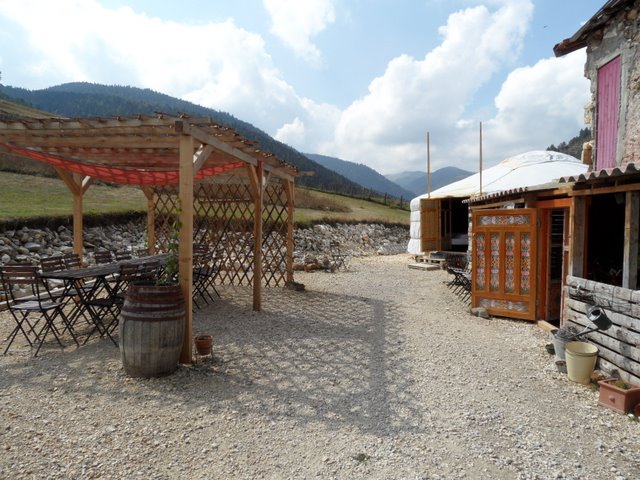
... and to our destination, Le Silence du Midi. How to describe Le Silence du Midi? It's a wonderful, and quirky, domaine that's been created by a Flemish couple who bought the old buildings, then completely broken down, 10 years ago and finally moved in 5 years later: they have rooms, and a couple of gites, and a yurt, and donkeys to stroke or to hire, and a childrens' play area, and space to put up your tent, and a simple restaurant, and they'll serve you drinks (including some great Belgian beers) and food pretty much at any time - for this is their home, and even if you've just popped in for an ice cream you're their guest. They have an eye for the oddball, and have furnished their terraces with 'finds' from the local brocantes. It's a feelgood place, a Slow place, and we stayed much longer than we'd intended.


Tuesday, 7 September 2010

Taking the Slow Road to the Gorges de la Frau: Part One

So, last Friday we decided to head east, over to the other side of Ariège - almost into Aude, in fact. We wanted to test out one of our new potential Slow Roads to see how it felt to actually follow and hence whether it would make it into the Slow Road collection. What's a Slow Road? Well, it's a term we've coined (along with Snail Trails for our walking paths) to describe some of the itineraries we're putting together here at Grillou for our future guests. A Slow Road will always be scenically beautiful (not difficult here), unhurried, quiet, a bit off the beaten track and sometimes slightly quirky; it will always offer interesting stops, a Slow Walk or two, at least one place to sit and just be, and somewhere interesting to eat and/or drink: in other words it will encompass all the different bits and pieces of the Slow philosophy.

We set off via Foix on the road to Lavalanet, but instead of continuing on the 'fast' road we turned off at Celles (don't be fooled by the grimy bit on the main road; behind that is a surprisingly pretty village with a lovely arcade of plane trees), from where a single track road starts to climb up towards the Col de la Lauze. Well before the Col, though, our attention was taken by a sign towards a chapel on the left: Notre Dame de Celles, site of an apparition. Never ones to turn down the prospect of a miracle, we followed it, up a steep road where there's a little parking area and an even steeper, stony pedestrian path through the trees. To be honest, the chapel is nothing much to write home about, unless you're a fan of Catholic neo Gothic, though the situation is beautiful. But I do like the story, although I had to dig it out when I got home as there's no mention of it on site when the chapel's closed: in 1686 (note that date well - nearly two centuries before the apparitions at Lourdes) a young paysan was coming back from the fields when a dove led him to a spring where it promptly turned into a young girl and told him not to be afraid because she was the Blessed Virgin (stop sniggering at the back, you heathens - I said 'the', not 'a' ...).

The people of Celles, she told him, needed to repent and it was his job to ensure that they did. Some time later, post-repentance, she appeared to him again and told him that the spring would be 'good'. After that dozens of people reported miraculous healings there; the place became a place of pilgrimage, and a chapel was built. However, the complex historical circumstances that prevailed at that point in time meant that the results of a religious enquiry that confirmed the miracles remained locked in a treasure chest in Pamiers; as a result the Vatican never got to 'pronounce' on the apparitions (if it had, Celles could have been Lourdes ... merde alors) and few people have ever heard of the place, although there is an annual pilgrimage and the chapel has very recently been restored.

Here's the chapel ...


in a lovely verdant setting


and the spring ...


Looks like the BV left her shampoo bottle behind ....

Thursday, 2 September 2010

Le Cap du Carmil: a balcony on the Pyrénées

The walk we did today is not a famous one. It's part of the GR du Pays de la Barguillère, but not in the major guide books; it's not in one of Ariège's newly sexy valleys like Bethmale or Bellongue. It's tucked away in the Séronais, in the middle of a deeply unspoilt, forested region with great natural beauty but almost no habitation. So what a lot of people don't know is that with a couple of hours and 400 metres or so of relatively easy climbing, a 360 degree panorama is yours, and as if that weren't enough, you'll get to eat your lunch looking at the entire chain of the Pyrénées from Mont Canigou in the east to the Pic du Midi du Bigorre in the west.

After a gentle beginning during which you weave in and out of mixed woodland, you start climbing through an area full of blueberry bushes where the views gradually start opening out on your right.


After a while you reach a gate leading to the estive - summer pasture - area; we passed through herds of cattle (including a magnificent and fortunately peaceable bull), horses and mules who were in the main not only curious about us but sociable too.


The path winds up to a false summit, at the top of which you see that you're most definitely not there yet ... but the views at this point are already fantastic. Another 75 metres or so of ascent and you're on the Cap - a wide, flat, grassy area: the highest point in the Séronais at 1617 metres. Today was slightly hazy, but even so we could see, apart from the chain, the whole of the department of Ariège plus the Corbières, the Black Mountains, the Petites Pyrénées, into Andorra and Spain, and in the distance the first buildings of the built up jungle of Toulouse.


We spent a long time on the end of our binoculars, in particular trying to locate Grillou (not easy as ours is one of the most hidden houses I've ever come across - but we did eventually trace the clearing in which the house and grounds sit).


It was fascinating to be able to see how different pays of Ariège may have no vehicular access from one to another, yet are incredibly close - often just a couple of kilometres apart, yet separated by a huge massif of rock. And it was fascinating too to try and tease out all the valleys that sit just underneath Mont Valier, the emblematic high peak of the Couserans region (the one and only advantage of winter, as far as I'm concerned, is that you can see Mont Valier from our garden - in the summer it's hidden by leaves and you have to content yourself with the view - a full-frontal one - from the track). The day wasn't without ornithological treats either: we were buzzed by bee eaters, possibly en route to overwinter in Africa, and a flock of hobby falcons, and as we ate lunch we spent a long time watching four golden eagles soaring on the thermals.


Oh yes, and when you've come down and it's still hot and your knees are protesting and you've broken your walking pole and you realise that even though you've been outside for much of the summer and it's now September you've got a bit sunburnt, it's less than a five minute hop in the car to the Auberge de Marrous and its lovely garden bar.