Friday, 31 August 2012

Cathares and Canadairs

Since we've been here we've somehow stumbled into the habit of taking a few days out during the last week of August to explore and get to know our area better - we call it our Ariège holiday. And this year was no exception - we blocked it in the diary many months ago, and then when we found out that the village boulangerie was also taking its hols this week there was really no argument (unless you're one of the people who wanted to stay with us. Sorry).

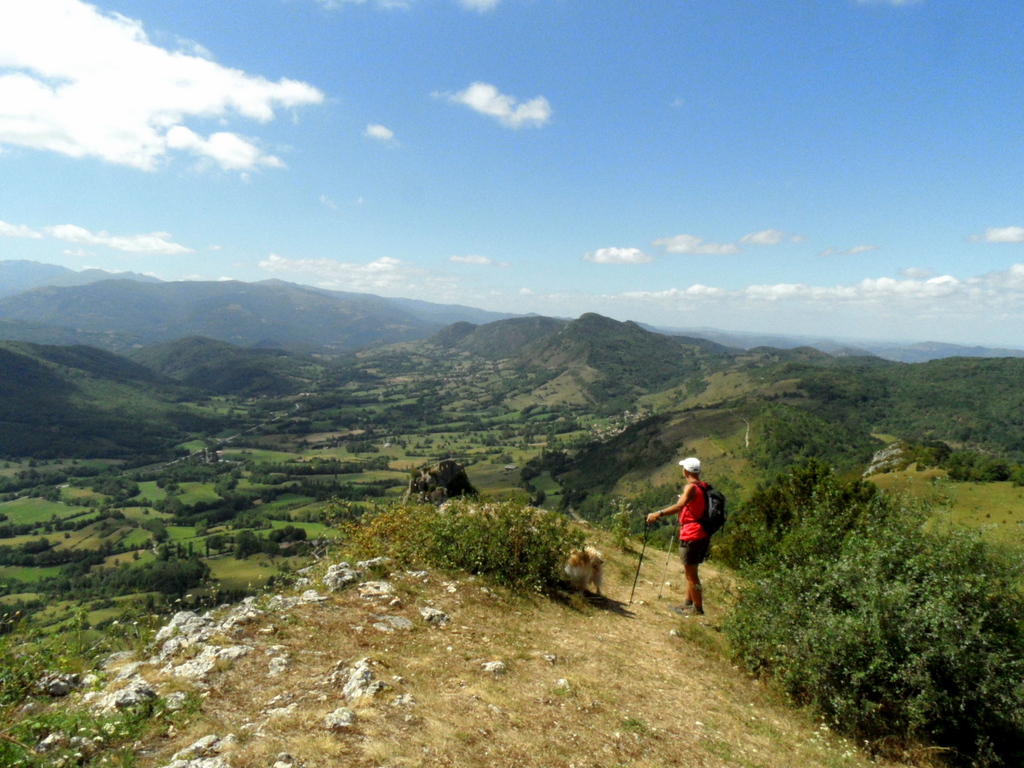
Having spent a manic two days turning the last few hundred kilos of plums (okay, I exaggerate. But not by much) into ice cream, sorbet, sauce, compôte, jelly and sweet chilli jam, we decided to take Sunday gently, starting with a long slow breakfast reading the papers in Foix before setting off on our first walk, a circular walk around and above the ruined Cathare château of Roquefixade and the village of the same name. This is a great walk and one that many of our guests enjoy - short enough for an afternoon, easy enough for almost anybody yet hugely satisfying and with breathtaking views.

Looking down onto the medieval village


First glimpse of the view south

And it just gets better ...
The château is quite literally 'fixed to the rock'

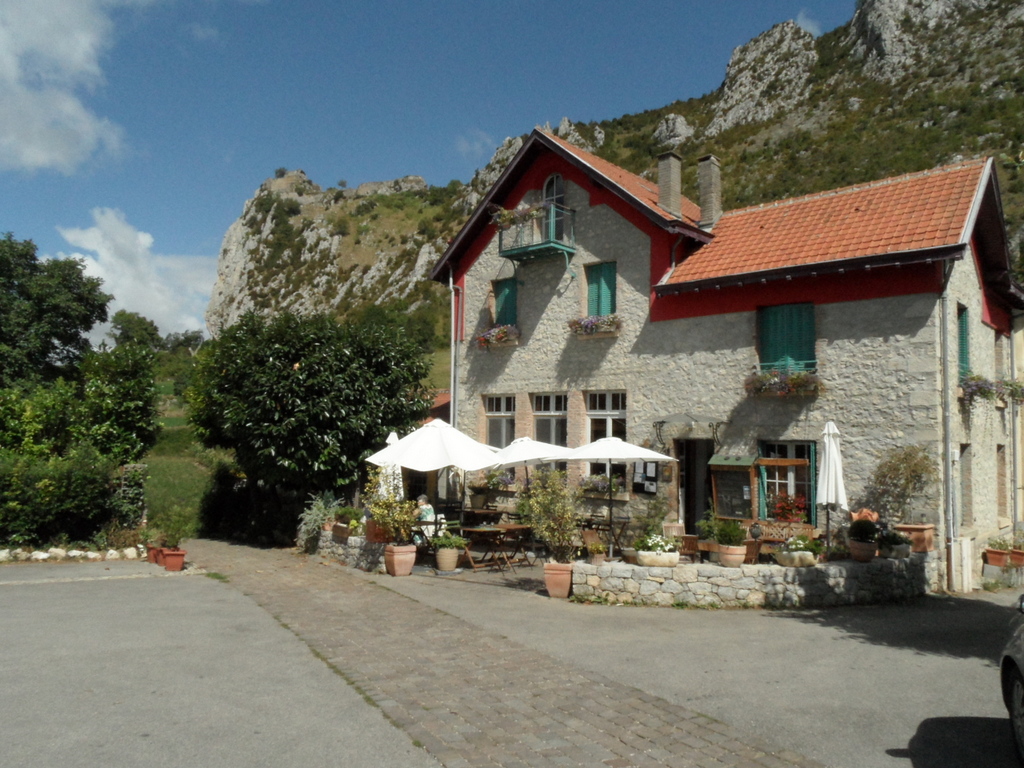
Back in the village, a lovely gîte d'étape for a beer afterwards

Then it was on to Puivert, just over the border into Aude, and one of our favourite campsites:

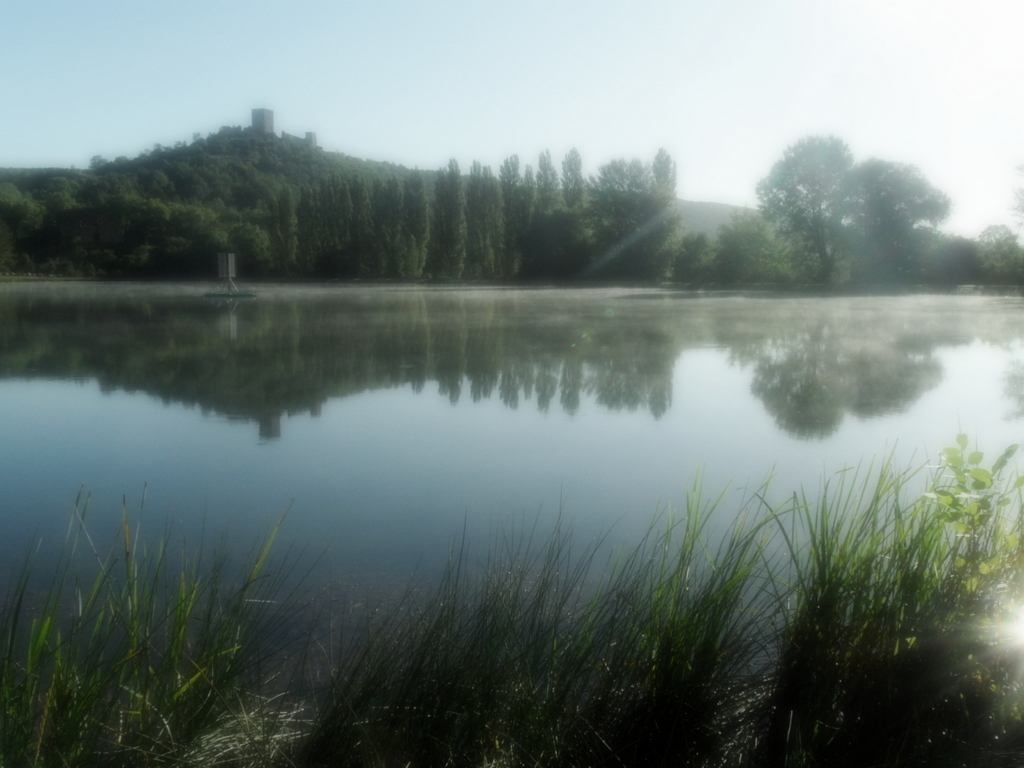
'Our' pitch looks right over the lake 
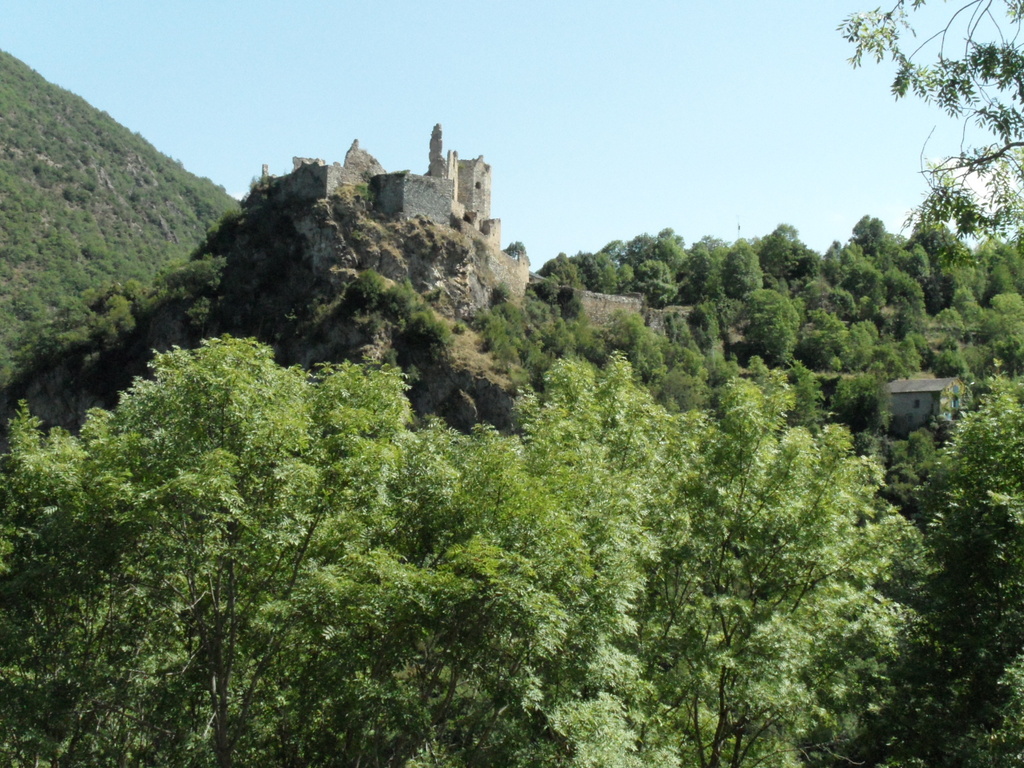
Here's the view - yes, another Cathare château
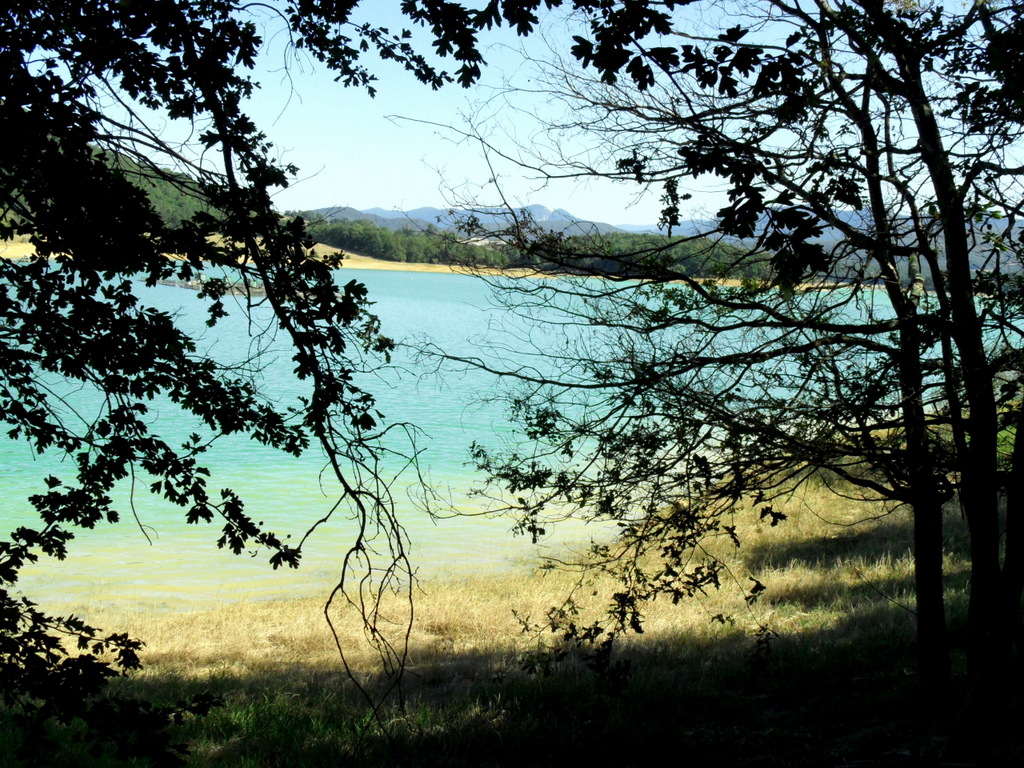
How do you tear yourself away from that? Well, you don't, really - you have a coffee and pain aux raisins, then a swim, then another coffee ... and then it's midday ... Eventually you decide to spend the afternoon walking the part of the path around Lac Montbel, a few kilometres away, that you haven't yet done.

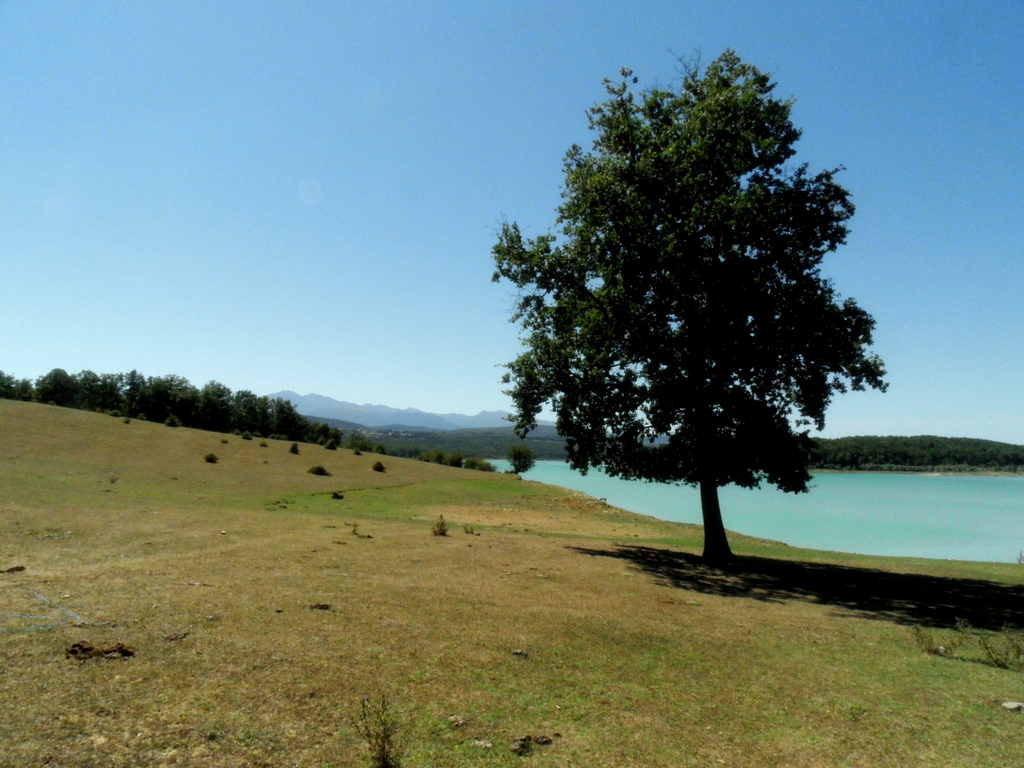
You could think yourself on the Med ...
And yes, the water really is that colour ...
On our way round, I was struck by a very strange, small cloud in a dip over the mountains to the south - it seemed to be a very strange shape. I put it down to a local storm, hoped it wouldn't make its way north, and thought no more about it. After a very hot walk, with no sign of a break in the weather, we landed back at the wonderful guinguette L'Ecume des Jours (recommended, both for its genuine beach shack atmosphere and for its slightly alternative twice weekly concerts) for a beer, and we were just enjoying the bizarre sense of feeling as though we were on a Greek island when suddenly two big yellow planes flew right over us. "They're Canadairs!" I yelled, as I leapt up to see what was what. A Canadair is a water bomber, or fire fighting plane; they fight inaccessible forest fires by scooping up water from the sea or a lake, and dropping it over burning forest. I first encountered them many years ago in Corsica, and although I've watched them several times since both on the French coast and in Greece I've somehow never lost the thrill of seeing them in action. Half the customers of the guinguette followed me over to the beach to wait for them to come back; we weren't disappointed, and cameras clicked wildly, mine included:

So skillful, the way they scoop up the water
I could almost touch this one
Altogether the Canadairs came back 5 times. After the first time, the local pompiers arrived, blue lights flashing, with several landrovers and a boat, presumably in case someone was unfortunate enough to get in the way of the planes. A siren now announced the Canadairs' arrival and drew an increasing number of spectators from the villages around, and the whole place began to feel like a big party. And then suddenly, it struck me. The odd looking 'cloud' that I'd seen nearly 4 hours earlier had been smoke; great chimneys of it were now rising from the exact same spot.

Later, I discovered that the fire had been a reprise of an earlier fire at L'Hospitalet: the one that Margaret wrote about in her blog just a few days ago. Scarier than that, I learned that the new outbreak had been discovered at around 4pm. I'd seen the smoke - although I hadn't realised that was what it was - two hours before that. I shuddered.

I did a lot more than shudder the next day, though you'll have to wait until the next post to find out why. In the meantime, enjoy a couple more of the Cathare châteaux we took in on the trip:

This is Usson, in Donezan, one of my new favourite places
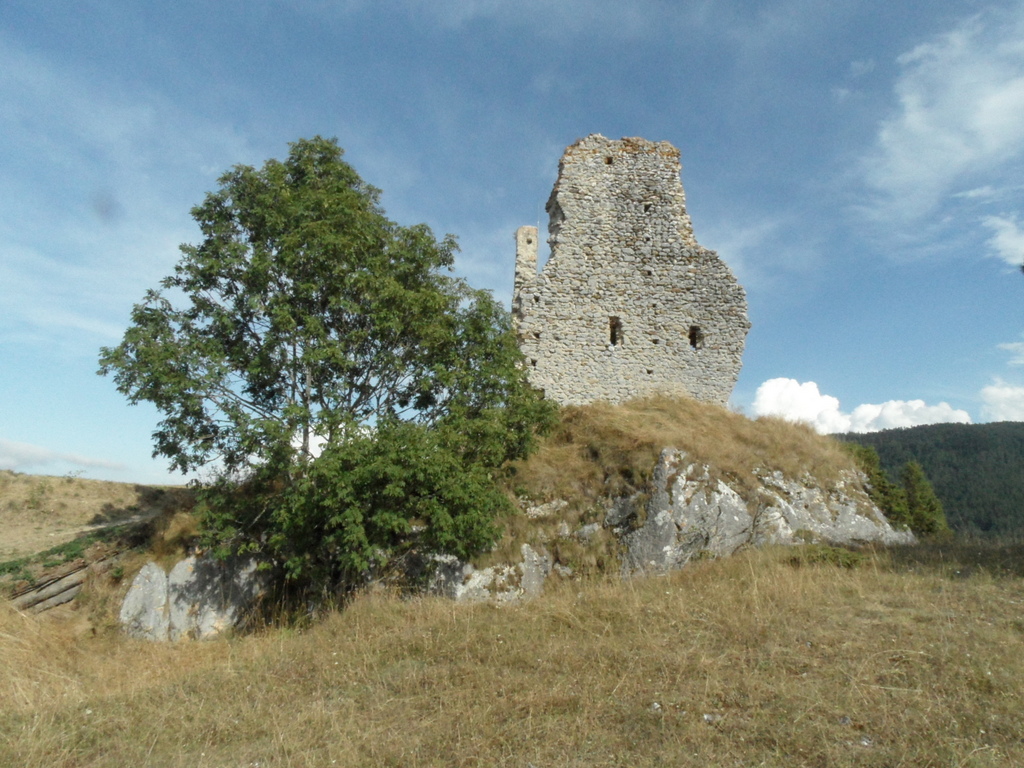
Montaillou, made famous by the author Le Roy Ladurie

Friday, 24 August 2012

Stress management

No, not us. We're fine; having a whale of a time, in fact.

But our grounds and our plants aren't. If they had blood pressure, it would be through the roof.

For the last couple of weeks we've had temperatures of 36 degrees or so most days (and for the last week they've not dropped below 22 at night); this month so far we've had just 2 hours of rain, all at once. And this year, our rainfall is running at between a half and two thirds of what was once considered 'normal'. Same thing last year. Compared to what friends in Spain have experienced so far this year, it may not be much to write home about.
But ...

... this is the Pyrenees. The ecosystems here have developed in response to a certain climate - if you look at detailed meteorological  maps, Grillou sits almost exactly on the borderline between Mediterranean and Atlantic climatic influences, giving us a healthy mixture of hot sun, clear unpolluted air, gentle breezes and enough rain to keep Ariège that amazing green colour that so struck us when we first came here one September many moons ago. When we started to look for the place to live, we discovered that once you went over the border into Aude the summer greens turned to browns and quickly found that our hearts were here, with the best of both worlds.

Now, as Bob Dylan, said, the times they are a'changin'. This is our lawn field today:


Trees are shedding their leaves as if it were November:


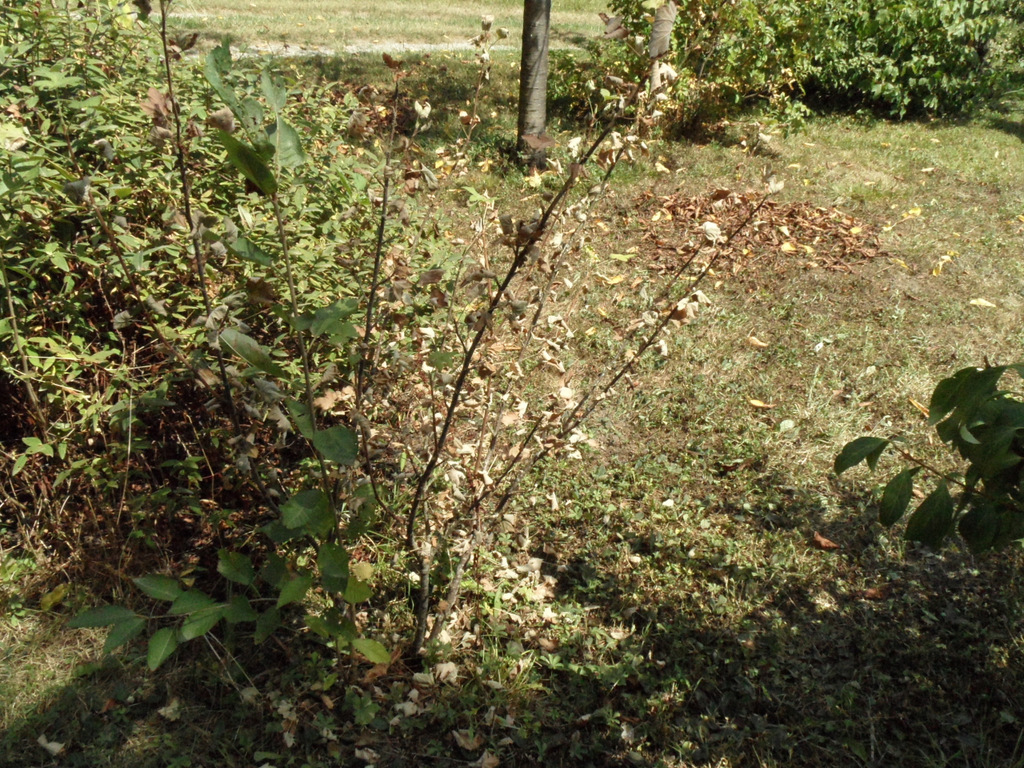
Lots of shrubs - the same shrubs that have struggled to re-establish themselves after the Big Freeze in February, when we had temperatures of minus 18 or lower for 2 weeks - are doing the same:


Who have thought that I'd have to spend half of yesterday raking up leaves?


The several-hundred-year old oaks that stand guard over our land are seriously stressed out, and we quite literally fear for their lives if we're now seeing the beginning of a new and very different pattern of extreme climatic conditions. And here's a sad sight: one of our wild cherry trees completely uprooted itself a couple of days ago and is now leaning at a precarious angle - the ground is so dry that the entire root ball has upended. The only question now is do we let it fall, or cut it down?


It's the same story in the woods around us, and we're acutely aware of how tinder-dry everything is - one stray spark could start a wildfire which would spread like - well, wildfire. We've not quite banned barbecues yet, but we do make sure that everyone who's using one has several buckets of water to hand ...

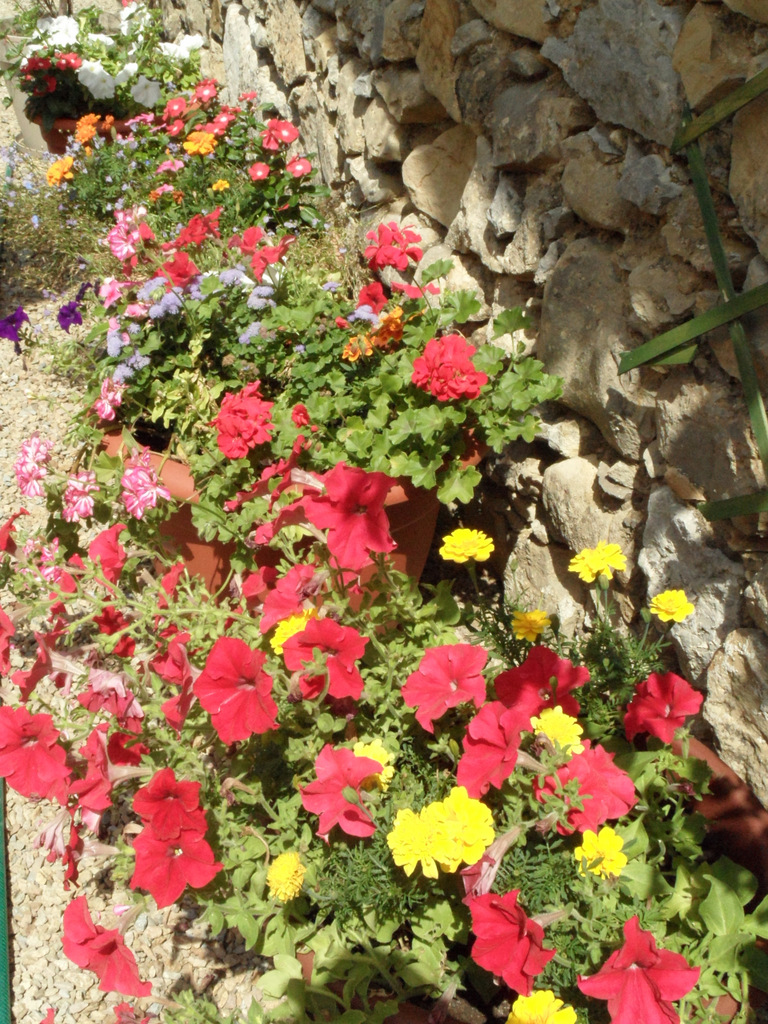
Our stocks of rainwater ran out a long time ago so we're having to resort to the hose to keep things alive, like the multitude of colourful pots that greet you on arrival:


And the roses, which by now should be preparing for their second flush:


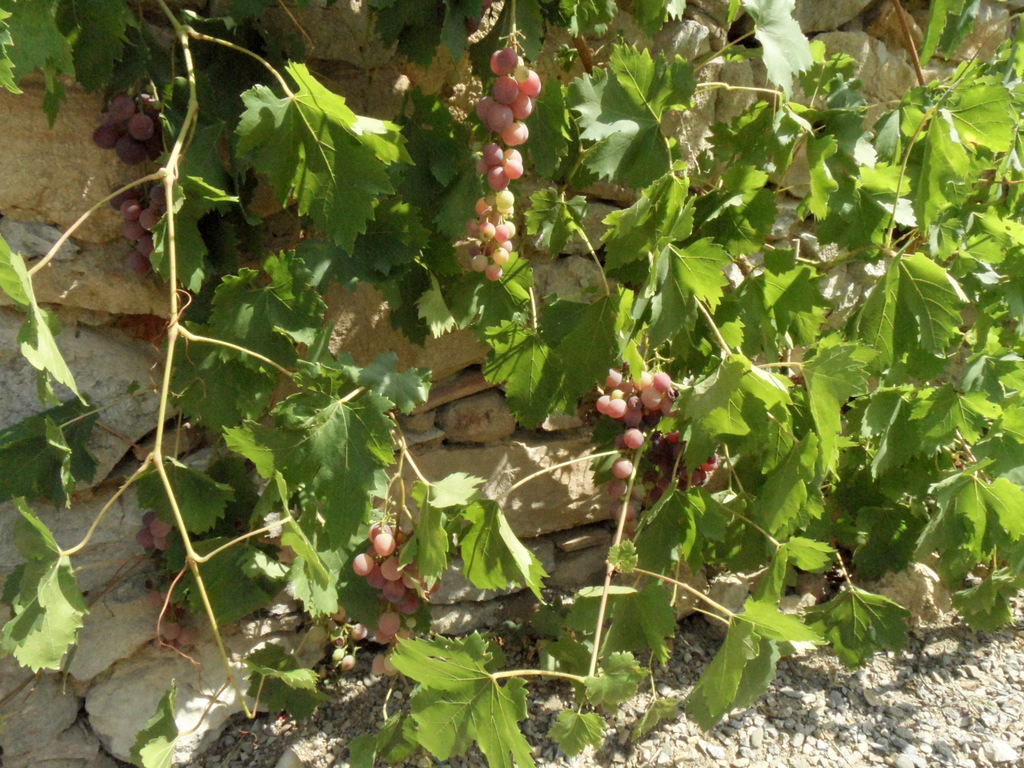
The good news is that we're having a fantastic crop of tomatoes that taste as though they've been grown in a hot Provencal climate. And then there are these - would you believe that this vine is only 2 years old?


We and our guests have moved on to Spanish time - dinner has moved itself slowly forward to around 9.30 as it's just too hot to think about eating before then - and we're all making good use of the shady 'Zen' terrace:


The heat is considerably less intense today - only 27 degrees at the moment - and there are rumours - only rumours, mind - of a little light drizzle tomorrow. Then we're back up into those thirties again ...

And then we're into September and October, which traditionally are Ariège's most beautiful months - warm, golden, balmy. But who knows, this year?

Saturday, 28 July 2012

What a pain

This may sound strange coming from someone who lives in a country stuffed full of boulangeries, but one of the few things I miss being able to buy here is what I call 'proper' wholemeal bread - the dense and chewy stuff with big bits in it, with that wonderful wheat-y smell that's just heaven with some butter and a smear of honey. (Wheat addiction? Moi?). The French pain complet just doesn't really do it for me, even the stuff produced by artisan bakers like the one in our neighbouring village of Montseron that produces organic bread in a wood-fired oven in what's little more than their house.

 We've always been bread makers (by hand, never in a machine), making not just wholemeal but a huge variety of different breads. In north Norfolk we lived a couple of kilometres away from Letheringsett Mill, a water mill restored to working order and flour production by Mike Thurlow; we bought as well from Adrian Colman at Garboldisham Windmill a bit farther south, from Maud Foster Mill in Boston and from Caudwell's Mill near Rowsley in the Peak District, close to where I used to live. All milled organic flours and were excellent; if I had to pick my favourite it might just be Maud Foster (sorry Mike!). But it was always a bit of a challenge finding out where the grain was grown - all the millers claim to use 'locally grown' grain, but they buy from their suppliers, who buy from their (bigger) suppliers .... and so on. It's bizarre, and rather sad - all the wheat that grows across East Anglia tends to disappear down farm tracks in huge lorries, never to be heard of again, at least by name.

So, when two of the guests who'd booked a holiday with us in July turned out to be organic growers AND millers and asked me if I wanted them to bring any flour with them, you just couldn't hold me down ...... enter Andrew and Leonie Workman, from Dunany Farm near Drogheda in County Louth, Ireland where their farm is surrounded on 3 sides by the Irish Sea. And apart from being Jolly Nice People, they also make flour which I reckon is the best yet: fine wholemeal, coarse wholemeal, spelt and rye. Have you ever stuck your nose into a bag of real flour that was milled just a few days beforehand? Bliss.

 We soon got stuck in. The bread is exactly what I've been craving: a gorgeous, nutty, golden crust, with a rich, sweet and moist crumb. It would fly at the market in St Girons ..... The spelt flour makes wonderful breakfast breads - we've used it so far for courgette and banana loaves, and various muffins - as well as pastry. And next up, as soon as I remember to buy some buttermilk, I'm going to be trying out Leonie's recipe for soda bread - watch this space!

Wholemeal loaves, 30% coarse, 70% fine


Look at that gorgeous crumb ...


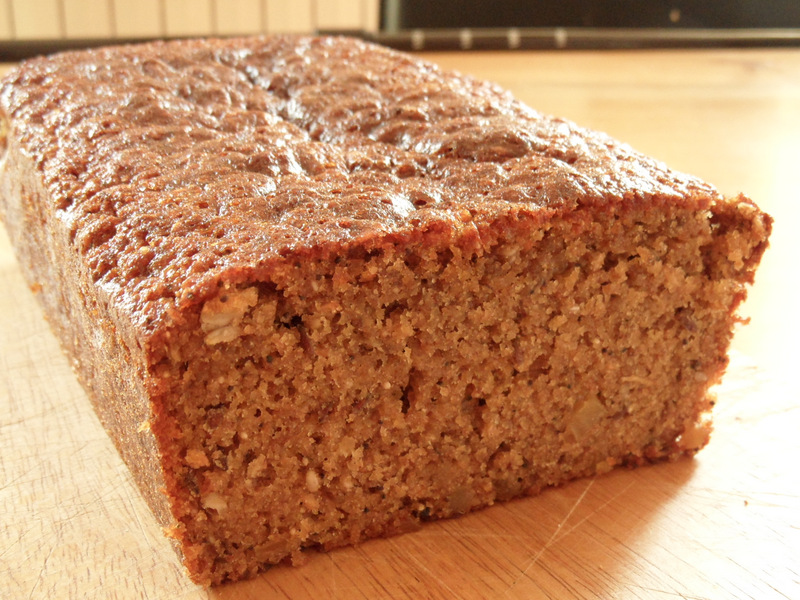
Banana, spelt and seed breakfast bread


Lovely moist texture


Just got to work out now how to import Andrew and Leonie, and their land, and probably the Irish Sea as well, to the Ariège :)

Actually we are hoping that enough people here will be interested in buying their flour that we can organise an occasional bulk pallet delivery - so if you're local, and you are, give me a shout. If you're in the UK and would like to see a local shop stocking their flour, give them a shout - they're currently looking for some UK outlets. Their contact details are here: http://www.organic-trust.org/members/detail/dunany_flour; they're on Facebook too: https://www.facebook.com/dunany.flour. And say I sent you!


Thursday, 21 June 2012

So you want to run a restaurant?

I was firkling through some old files today, as you do, and I came across a whole pile of the articles I wrote for a Norfolk magazine a few years ago. This one made me smile. I thought it might make you smile too.


So you want to run a restaurant …?
One of the things we hear most often, especially in the summer when half the
population seems to be looking for ways to Not Do Their Jobs, is “Oh, it must be
soooo wonderful to run a restaurant …”. And yes, it is (usually) – though I suspect
perhaps not in the way that you think. Oh yes, we’ve all had celebrity-chef fantasies
of spending long, hot afternoons at the beach, before sauntering into a pristine
kitchen to don an immaculate set of whites and do a few achingly clever things to the
day’s ingredients before socialising the evening away over a glass or two with the
diners and collecting the evening’s accolades, while the minions toil away at the
sheer hard graft.

Real life, of course – at least in the ever-decreasing number of owner-run restaurants
in this country – ain’t like that. So this article is for the curious, for anyone who’s ever
thought about starting a restaurant, for all those who wonder why we don’t open for
lunch, ‘only’ open six evenings a week, and close down from December to February
… and especially for you, if you’re the man I overheard at our noticeboard the other
day who grunted while reading our opening times, “Hmph. They don’t put themselves
out, do they?”. What follows is an unembellished account of a perfectly ordinary day
in the middle of July – just one of a couple of hundred other such days through the
year. Yes, this, my friends, is the reality …

7am. Rudely awaked by Today programme. Groan. Drag self out of bed (John) to
start clean-up from previous night and prepare for guest breakfast (I am unspeakable
and best avoided before 8.30). Wash/rinse/dry/polish 40 glasses/120 pieces of
cutlery/12 coffee cups and saucers. Remove red wine and coffee stains from
napkins. Guests have asked for room service breakfast, so prepare and serve for
9.45. Eat own breakfast (sort of).
10am. Shopping. Sprint with famous purple shopping trolley round usual haunts in
Holt. We won’t buy anything that we can’t taste, smell or feel, so always hand select
every bit of fruit and veg that we or our neighbouring growers don’t/can’t grow, right
down to last onion.
11.15am. Back. Unload supplies. Deal with 5 voicemail messages; iron 3 days supply
of napkins and aprons; polish and lay up restaurant tables; update blackboards;
clean windows. Clean guest suite; replenish supplies. Guest has mopped up major
coffee spill with white hand towel. Attempt to deal with stain – fear may be write-off.
Put first of 3 loads into washing machine. Washing machine dead. Swear. Call
regular repair guy. On holiday. Call other repair guy. Will come tomorrow [machine
stays out of service for 6 days. Napkins, aprons, tea towels, guest bedding and
towels washed by hand till fixed]. Start day’s bread, plus brioche for guest breakfast.
Slurp coffee.
12.30pm. John: to restaurant garden with 4 buckets of compost and wheelbarrow full
of bottles to drop at bottle bank. Dig 3 rows of potatoes; pick French beans and
courgettes. Hand weed round leeks. Collect beetroot from neighbouring gardener,
plums from another. Kalba: to desk. Check and answer emails; deal with post, phone
calls, accounts and payments; update guest suite availability on website. Think about
next EcoEcho article (late). Time runs out. Interrupted by (1) delivery of 7 cases of
wine; (2) non-delivery of cheese; (3) 17 calls from BT trying to persuade me to buy
back line rental. Start preparing dessert.
1.30pm. John phones on mobile: pigeons have pigged out on cavalo nero seedlings
– needs to reinforce netting cages so will be late back.
1.45pm. Write rest of menu for evening – open to change, of course, if (a) garden
offers unexpectedly large/small/early/late/no yield, or if (b) something different
suggests itself during afternoon – nothing ever fixed until moment it hits the plate.
2pm. Start mise en place: gather ingredients, pick herbs, make stock, clean and prep
first round of veg. Make aioli and pesto. Listen to play on R4.
2.30pm. John returns. Knock back bread. 30 minute tea break. Miss end of play.
3pm. Clean/chop/prep/cook/wash up, ad infinitum. Bake bread and brioche. Do usual
daily round of minor repairs, paint touch-ups etc; check stock and place orders for
eggs/milk/cream/wine/water/oil/cheese/coffee/olives etc as needed.
5.45pm. Kalba: yes, still in the kitchen! John: sort out day’s recyclables; check and
bring in wines and mineral waters; clean restaurant, serving area and loo; sweep
kitchen floor.
7pm. Listen to Archers. Final prep; psych selves up for service. John makes self
beautiful. Figuratively speaking.
7.30pm. Doors open; first diners arrive. John: greet, settle and put everyone at ease;
serve aperitifs, wines, waters. Kalba (in kitchen): in fast forward mode, now alone,
preparing to serve roomful of first courses at 8pm.
8pm to 10pm: John: serve all tables, describe each course, ingredients and
provenance to each; ferry plates in and out; serve more wines and waters, answer
questions about food, us, life, universe and everything. Kalba: cook, finish and plate
four courses; clean down kitchen between each course. Eat saucerful of dinner.
Wash, dry and polish 60 plates; wash all pots and cooking implements. Raise energy
by listening to Queen (no, not that one) on headphones. Leap around kitchen. Scrub
down kitchen. On good day, talk to kitchen-visiting diner. On bad day, talk to self.
11.20pm. Last diners leave. Clear room. Stack glasses and coffee cups ready for
washing tomorrow morning; wipe down tables; straighten chairs, sweep floor. Go out
with torch to remove slugs and snails from lettuce and herb plants.
11.45pm. Check evening’s emails and voicemails. Slurp tea. Do Sudoku puzzle. Go
to bed. Have now been working for nearly seventeen hours: that’s one and a half
hours – each – for every person who dines. Never mind. Soon be December.

So tell me … do you still want to run a restaurant?

Tuesday, 19 June 2012

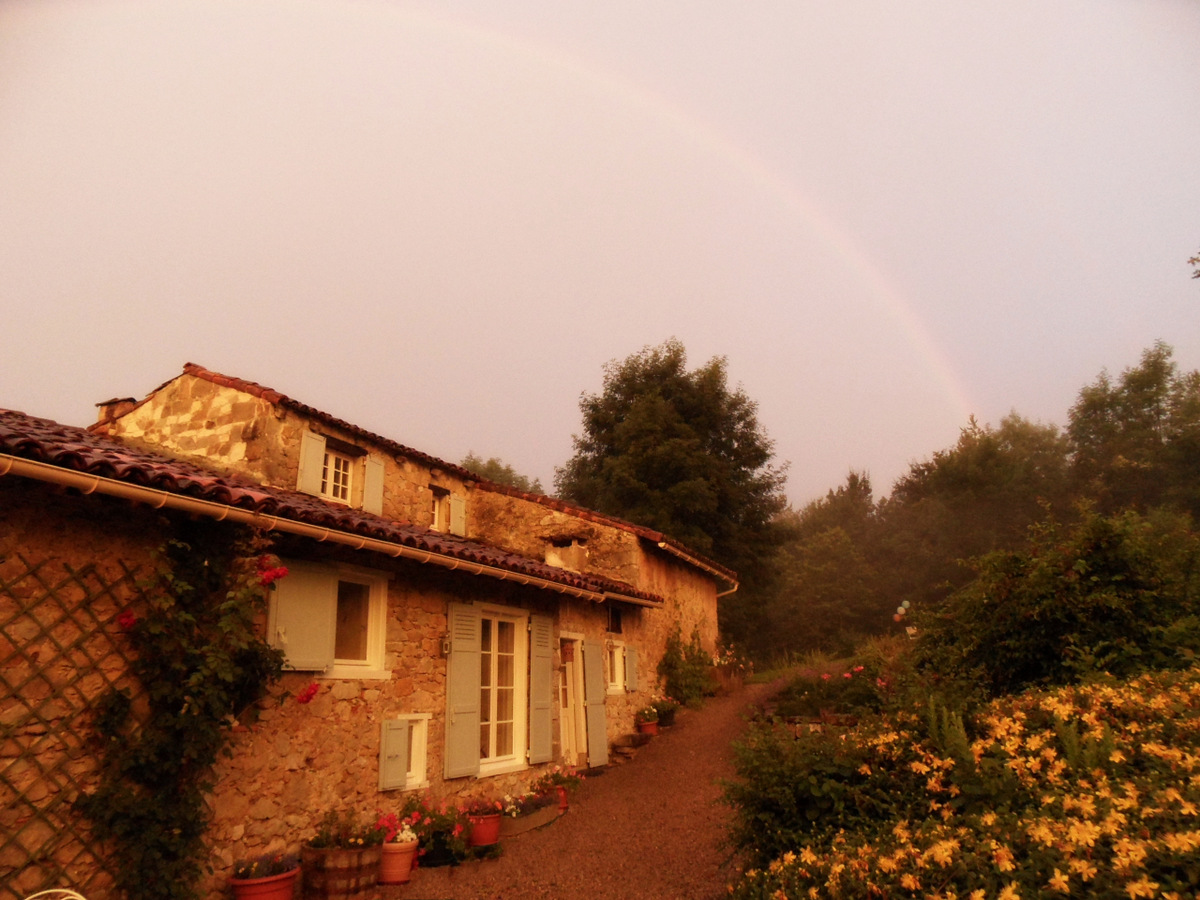
Somewhere, under the rainbow

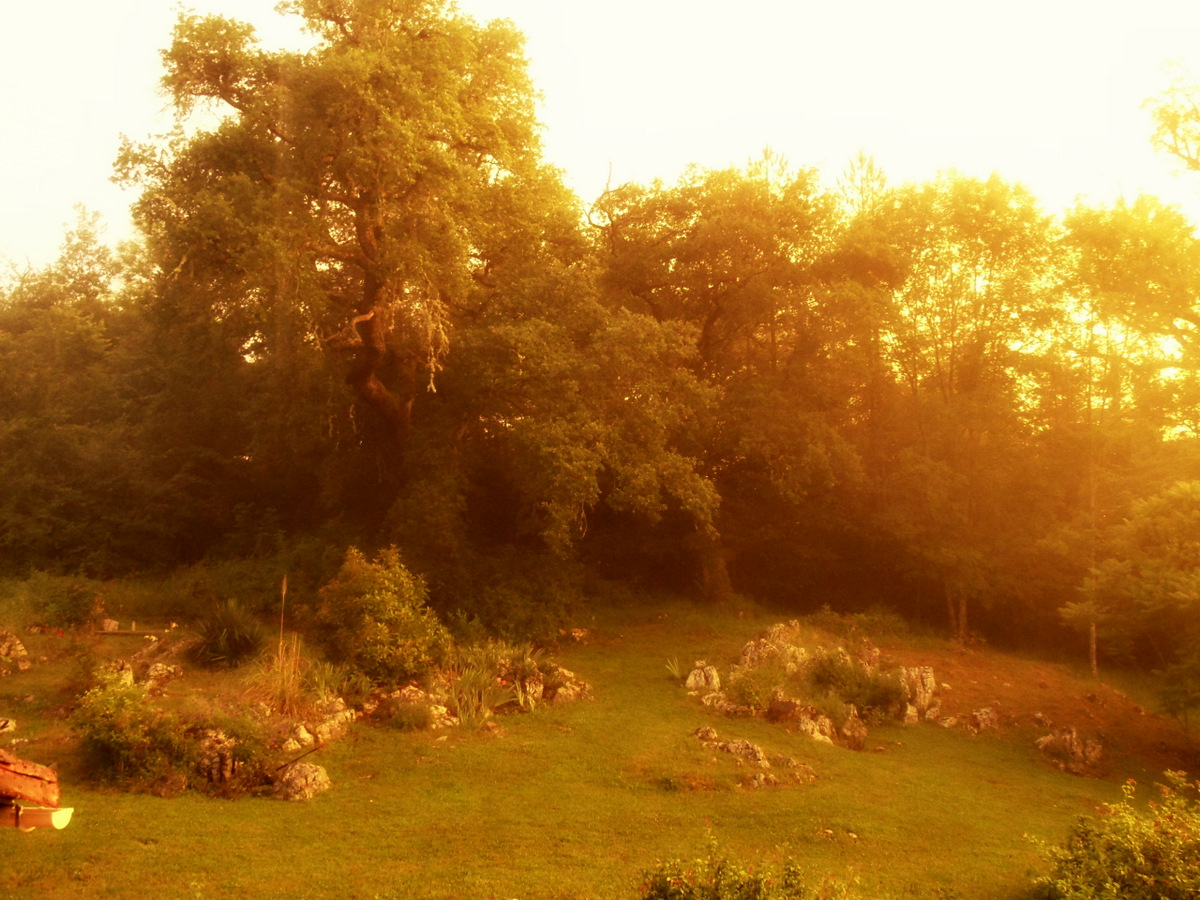
Suddenly at sunset this evening our world went golden.


I ran outside with the camera. It had been raining for most of the day; it was still raining, but soft and warm. The cloud was thin and gauzy, and the rays of the sun lit everything up like a Photoshopped soft focus image.


Turning back towards the house, I found the biggest rainbow I've ever seen arched right over Maison Grillou.


As I watched, the light changed colour before my eyes.


And then changed again ...


And then the heavens opened and the rainbow faded. I ran upstairs to catch the last moments of the sun.


And then it was gone.


But at least I now know what's at the end of the rainbow.

We are.

Saturday, 9 June 2012

A jam session

Over more years than I can believe of providing breakfasts for guests from all over Europe (and now all over the world), I've learned that there are two sorts of jam that will always fly out of the pot almost faster than I can make them: one is strawberry, the other apricot. Sometimes, here, you'll find on the markets little pots of home-made but ponced up jams such as strawberry and mint, or apricot, lemongrass, rum and cardamom (?!), which to be honest are not really ma tasse du thé: I just want to taste fruit, big fruit and more fruit. So with a few exceptions (like courgette, which on its own is pretty boring ...) I don't add anything to my jams except sugar.


My own very most favouritest jam in the universe is apricot. I adore everything about it it: the tartness, the colour, the smell, the flavour, and at this time of year I'm like a excited hunting dog who can sense in the air the approach of the hunting season. And so when in my usual greengrocer's yesterday I spied a bunch of elderly women in flowery pinafores all jostling round some crates right at the back in the corner I knew straight away what they were up to: apricots! In spite of not wearing the trademark apron and slippers I made a beeline for their corner, and sure enough there they were: an 'arrivage' of 5 kilo crates of the biggest apricots I've ever seen - the size of small peaches, in fact - from Trouillas, in the neighbouring department of Pyrénées-Orientales where we reckon the best apricots come from. They were Pinkcots, one of the earliest varieties and a new one to me, but they tasted good, and anyway all those pinafores can't be wrong ..... so having indulged in the obligatory nods, half smiles, tastings and finally conversations, I was eventually permitted to join their number and appropriate a crate.


In my never-ending quest for flavour, I've fiddled and farted around with my methods over the last few years and now make jam quite differently from how I used to do it in England. My aim is to cook the fruit for as short a time as I can get away with, so I start by macerating it with the sugar overnight; that means I'm starting off with the sugar already liquified which cuts precious minutes off the cooking time.

Then there's the sugar. We can't buy pectin here, so I use this ...


... special jam making sugar which dissolves easily and has natural pectin added to it, which means no need to add lemon juice and adulterate the flavour of the fruit.

And then there's the thorny question of when it's done. I much prefer the French set, which is a lot lighter than the more typical stand-your-spoon-up-in-it English one, and so these days I tend to stop as soon as the jam hits 103°C (sometimes even 102°) instead of boiling it for 5 minutes at 104° as so many UK recipes would have you do. But mostly I do it by ear, by feel and and by eye: when it's ready the bubbling sound changes timbre, the spoon drags ever-so-slightly more in the fruit, and when I flip a little bit onto the granite worktop and wobble it with my finger it feels like jam. At that point I do the fridge test: I take the pan off the heat, put a teaspoon of the jam onto a cold saucer and stick it into the fridge for 5 minutes. If after that it's clearly jam, we're there. (Some books will tell you to look for wrinkles, to which I'd say 'yes, but ... too much wrinkle, too solid a set'. If that happens, no worries: add a little fruit juice to the pan, bring it back up to temperature and test again). And that's it. Whole batch done and dusted in 12 minutes.

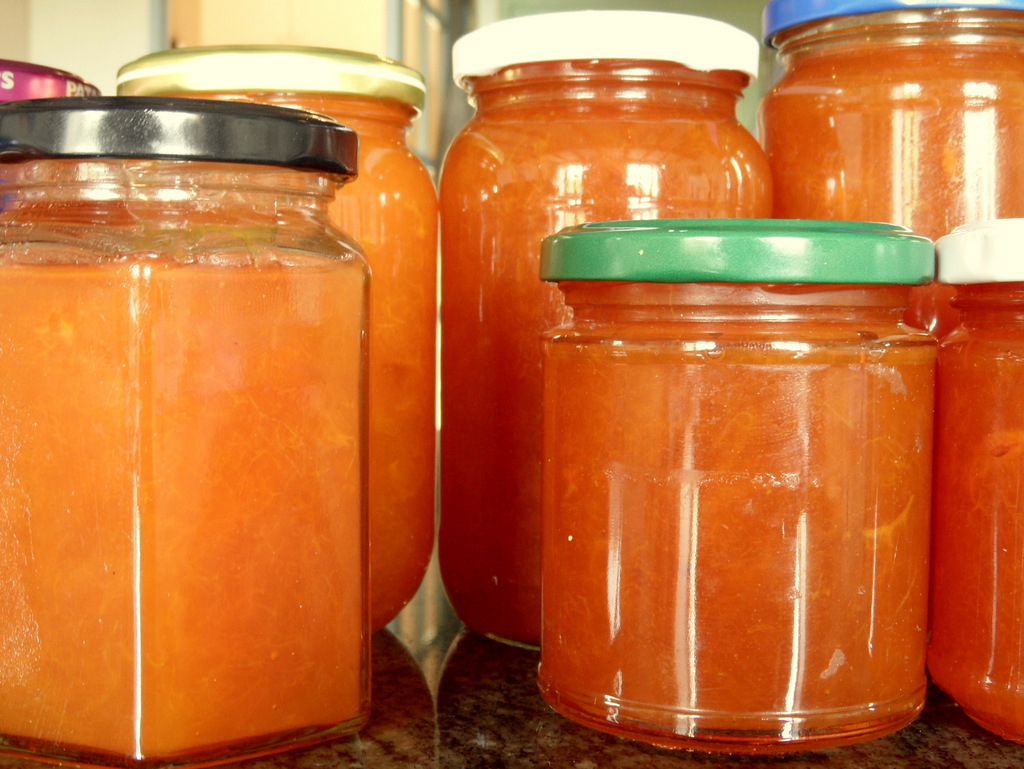
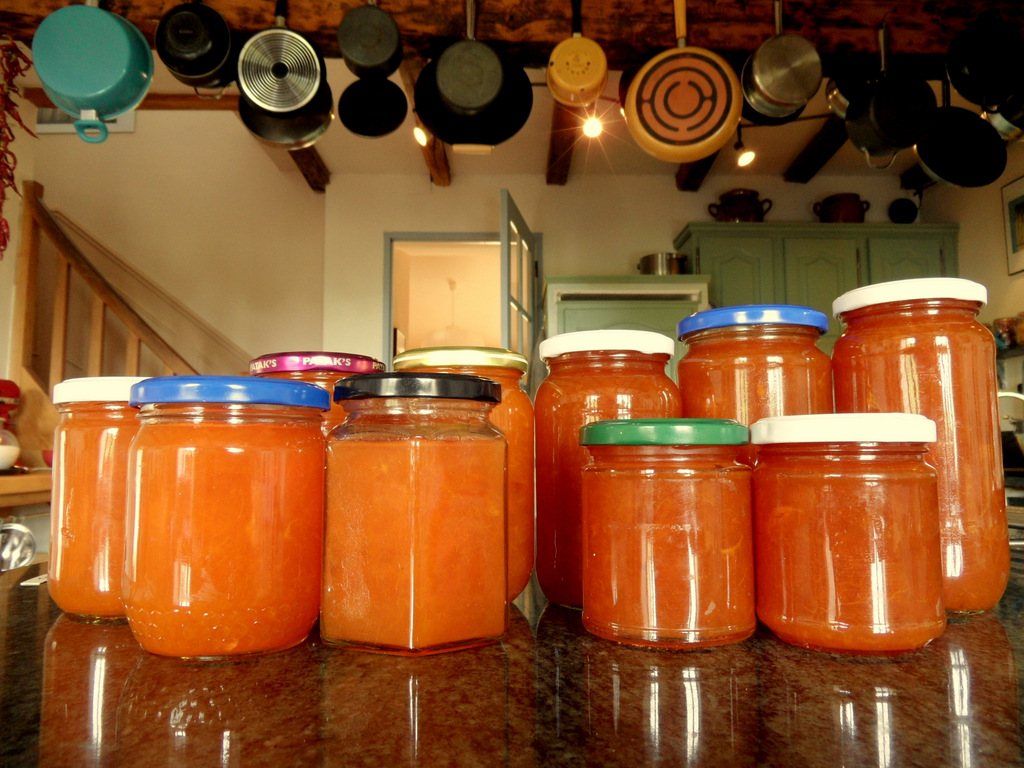
This morning, observed by a salivating guest, I made 2 batches: one with 600g of sugar per kilo of fruit, which gives a very light, almost compôte-like jam (on the left in the photo below); the other - on the right - with 750g of sugar per kilo of fruit, which makes a more traditional jam.


It'll be on the breakfast table, along with several other flavours, tomorrow ....

PS  Oups - I nearly forgot to mention the free froth! As the fruit and sugar mixture comes up to the boil, it froths up like mad and threatens to invade the kitchen like something out of a sci-fi novel. All the books will tell you to scoop it out and discard it. I don't. Or rather, I do scoop it out, but I never discard it. I let it sit for a while; it'll separate into a light foam at the top and a syrup at the bottom. I pour the syrup into some glasses, add a little Amaretto, then mix the froth into some crème fraîche or whipped cream and spoon it over. Et voilà ... free dessert. It's a bit like a mousse or syllabub, and quite, quite delicious.